ServicesElectrical Repair
Electrical Repair in Benbrook That Starts With Testing
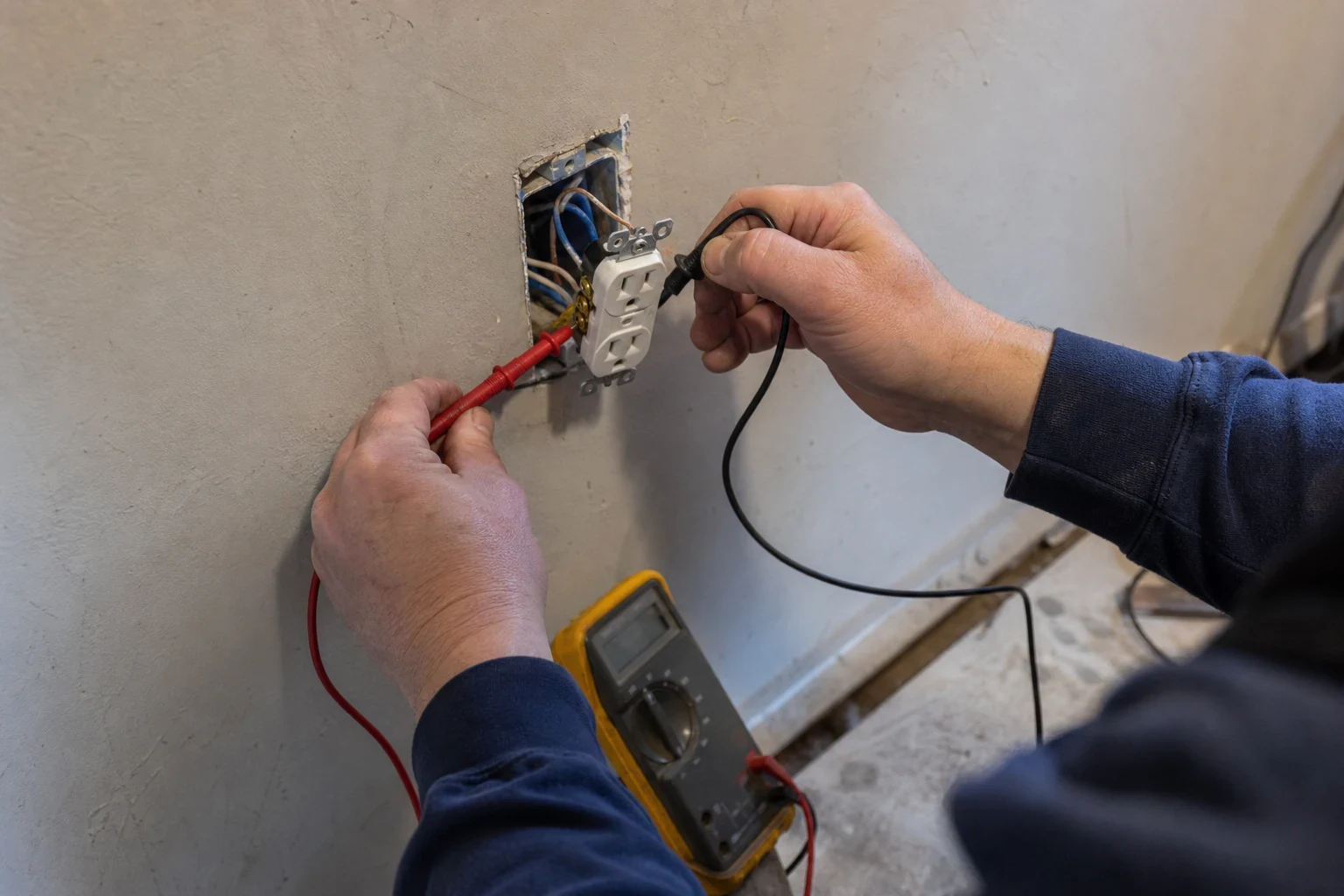
When an outlet goes dead or a breaker keeps tripping, the part that looks bad is often not the part that failed. We test the circuit, find what actually went wrong and fix that. You hear what we found before any repair starts.
What Electrical Repair Covers
Electrical repair is for the problems that show up in daily life. A row of outlets stops working. Lights dim when the AC kicks on. A switch feels warm. A breaker trips every evening around dinner. These are symptoms, and the same symptom can come from very different faults.
A dead kitchen outlet might be a tripped GFCI two rooms away, a loose wire on the back of a receptacle, or a burned connection in a junction box. Swapping the outlet fixes only one of those. So we trace the circuit first, then repair the real fault.
If the fix turns out to be bigger than a repair, like a worn-out panel or wiring that should be replaced, we tell you plainly and explain why. Most calls end with a straightforward repair.
What We Do on a Repair Visit
- Circuit tracing
- We map which outlets, lights and switches share the problem circuit. That tells us where to look instead of opening every box in the room.
- Testing under load
- Some faults only show up when the circuit is working hard. We test voltage and connections with real load on the line, so an intermittent problem has nowhere to hide.
- Connection repair
- Loose and scorched connections are behind a lot of repair calls. We cut back damaged wire, make clean new terminations and replace any device that heat has cooked.
- Breaker and device replacement
- Worn breakers, cracked outlets, failed GFCI and AFCI devices and bad switches get replaced with parts matched to the circuit.
- A plain explanation
- Before we leave, we show you what failed and what we did about it. If we spotted something else worth watching, you hear about it, with no pressure to fix it today.
Signs It's Time for a Repair Visit
Breakers that keep tripping
One trip can be a fluke. Repeat trips mean an overloaded circuit, a short or a failing breaker, and each one needs a different fix.
Lights that flicker or dim
Flicker on one fixture is often a bulb or a loose socket. Dimming across several rooms when a big appliance starts points to a connection problem worth tracing.
Warm or discolored outlets
An outlet or switch plate should never feel warm. Brown marks or a melted look mean heat has built up at a connection. Stop using it and have it checked.
Buzzing or a burning smell
A faint buzz from a switch, outlet or panel, or a hot plastic smell, is a sign of arcing. Turn off that circuit at the breaker if you can do it safely.
Outlets that quit for no clear reason
When a group of outlets goes dead and resetting breakers does nothing, there is usually a failed connection or a tripped device hiding somewhere upstream.
How a Repair Visit Goes
- 1
You tell us what's happening
On the phone we ask when it started, what was running at the time and which rooms are affected. Those details often narrow the search before we arrive.
- 2
We test before we open anything
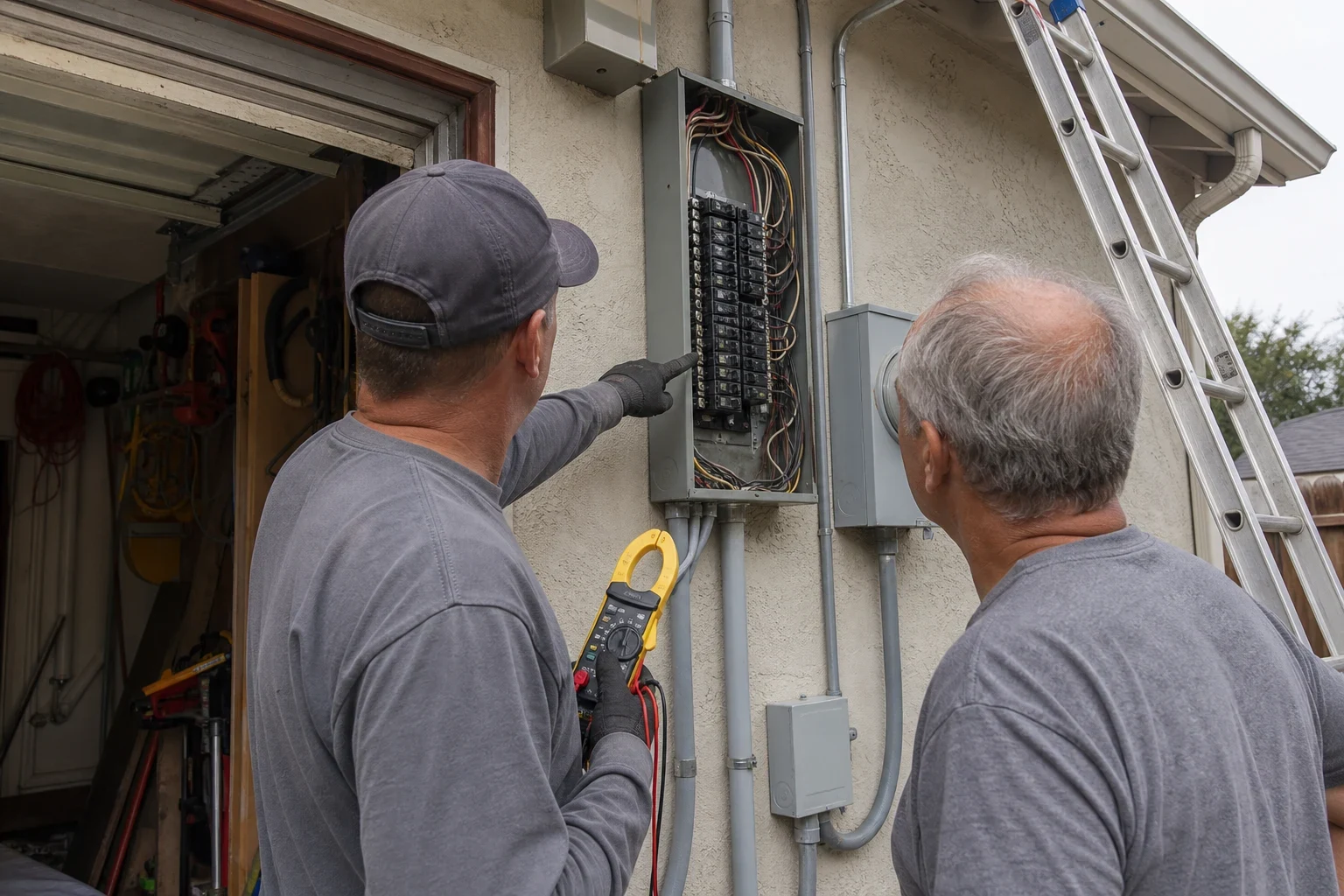
At your home we check the panel, test the affected circuit and confirm where the fault is. This step is where most of the real work happens.
- 3
You approve the repair
We explain the cause in plain words and give you the price for the fix. Nothing gets repaired until you say go.
- 4
We fix it and test again
After the repair we retest the circuit under load to make sure the problem is gone, then clean up and walk you through what we found.
What Affects the Cost of a Repair
Repair cost depends mostly on how long it takes to find the fault and what it takes to reach it. A loose wire behind an easy-to-reach outlet is a short job. A problem buried in an attic in the middle of a Texas summer takes longer. You get the price for the repair before we start it.
- Finding the fault
- A clear, steady problem is quick to locate. An intermittent fault that comes and goes can take more testing to pin down.
- Access
- Wiring behind finished walls, in tight attics or under built-in cabinets takes more time to reach and to close back up.
- Parts needed
- A standard outlet or switch costs little. GFCI and AFCI breakers and devices cost more, and some older panels use breakers that are harder to source.
- How far the damage goes
- If heat has damaged the wire itself, we may need to replace a length of cable or add a junction box, not just the device on the end.
- Permits on bigger jobs
- Swapping a single device usually needs no permit. Larger repairs can, which adds a permit fee and an inspection to the job. We take care of that paperwork for you.
What People Ask Us About Repairs
Something not covered here? (682) 327-1771
My breaker trips over and over. What's going on?
Repeat trips come from a short list of causes. The circuit may be carrying more than it was built for, like a space heater and a microwave sharing one kitchen line. A short in a wire or a plugged-in device tends to trip the breaker again right after you reset it. Or the breaker itself has worn out and trips too easily. Our testing tells us which one you have, so you don't pay to swap a breaker that was doing its job.
Can I just replace the outlet myself?
Sometimes the outlet really is the bad part. But if it failed from heat, the cause is often a loose connection or damaged wire behind it, and a new outlet on that same wire will burn up the same way. If you see scorch marks or melted plastic, have the circuit checked before you put anything back in.
Will you fix it on the first visit?
Most repairs get finished on the same visit where we find the cause, since we carry common breakers, outlets, switches and wire on the truck. If a part has to be ordered, like a breaker for an older panel, we make the circuit safe and come back to finish.
Do you pull permits for repairs?
Yes, when the job calls for one. Plenty of small repairs, like swapping a failed outlet or switch, don't. For the ones that do, we file the paperwork ourselves and line up the inspection with whichever office covers your address. You will know which kind of job you have before any work begins.
What if the problem turns out to be my panel?
Then we say so and show you why. Sometimes a single breaker or a loose bus connection can be repaired. If the panel itself is failing, we can talk through options on our Panel Upgrades page, but the decision is yours.
Get the Real Problem Fixed
Tell us what your outlets, lights or breakers are doing. We will set a time, find the cause and fix it right. We work in Benbrook and nearby towns like Fort Worth, Aledo and Crowley.