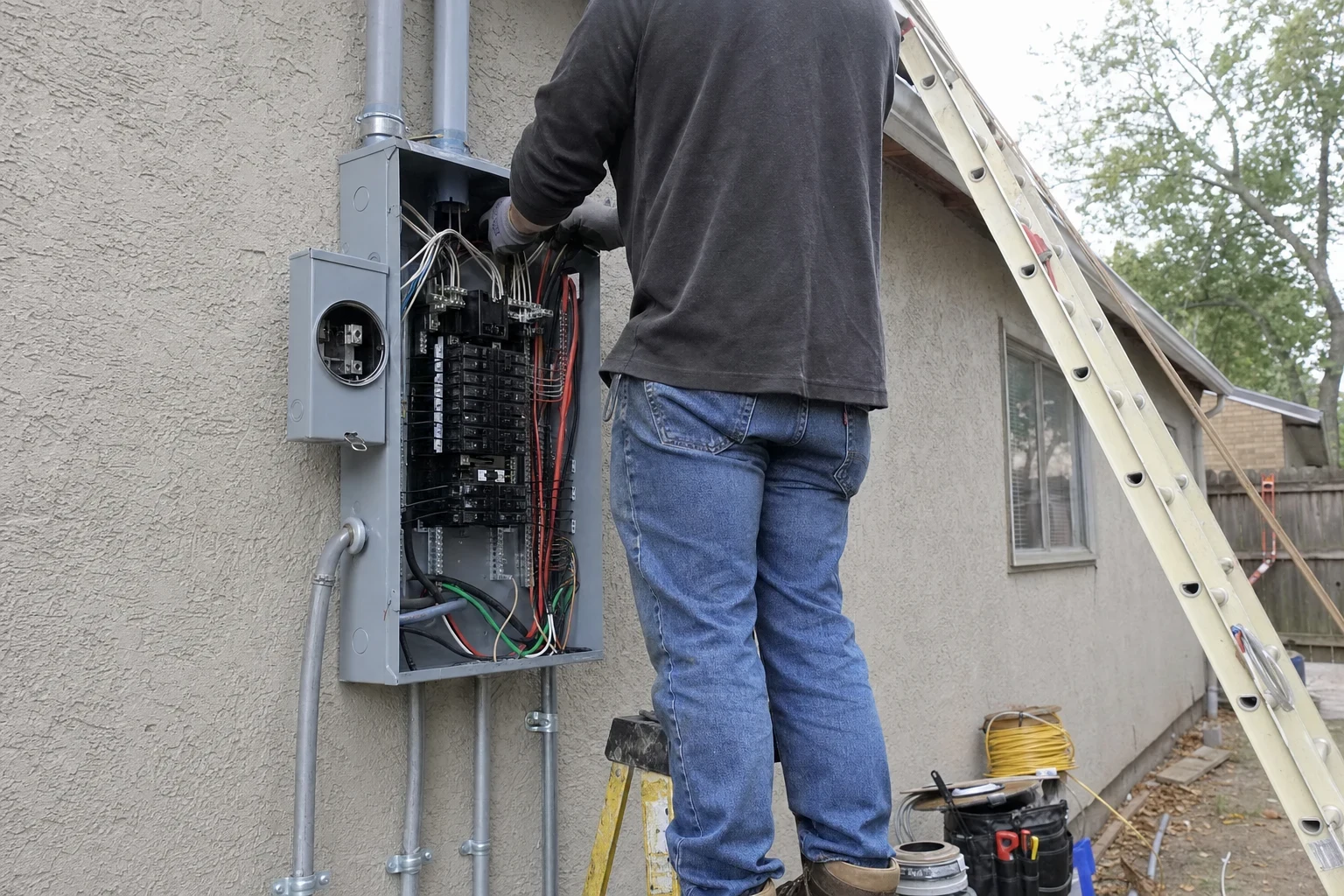
ServicesPanel Upgrades
Panel Upgrades in Benbrook
A tripping breaker or a full panel does not always mean you need a bigger one. We check your load, the wiring, and the service coming in first. Then we tell you plainly whether a new panel is the right fix and what size makes sense.
What Your Panel Does and When to Replace It
Every circuit in your home starts at the panel. Power comes in from the utility, and the breakers send it out room by room. If the box is undersized, worn out, or made by one of the brands known for breakers that fail to trip, the rest of the system is only as safe as that box.
We do not start by selling amps. We start by looking. That means opening the panel, checking for heat damage and loose lugs, and adding up what your home really uses. In a Texas summer, central air alone can be a big share of that load, so it gets counted carefully.
Sometimes the answer is a loose connection or one bad breaker, and that is a job for our electrical repair visit. When the panel itself is the problem, we replace it, pull the permit, and see it through inspection.
What a Panel Upgrade Includes
- Load calculation
- We add up your appliances, HVAC, and any planned additions like an EV charger. That number decides the panel size, not a guess.
- New panel and breakers
- We remove the old panel and install a new one with fresh breakers matched to each circuit's wire size. Every circuit gets labeled so you can find it later.
- Grounding and bonding
- We check the ground rods, the bonding to water and gas lines, and bring them up to current requirements. Many older homes are missing pieces here.
- Service entrance work when needed
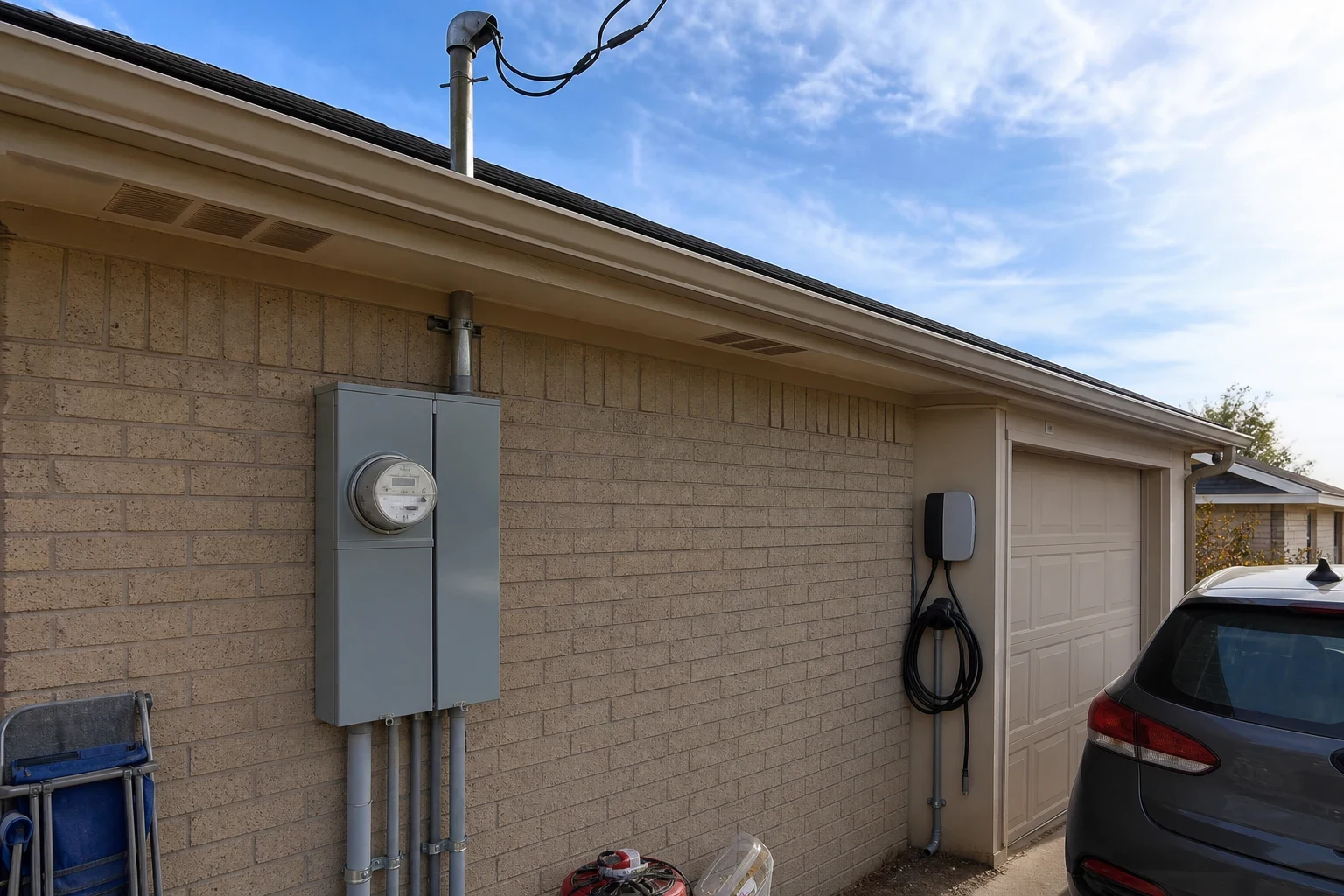
- If you are going up in amperage, the meter base and service wires may need to change too. We tell you up front if that is part of your job.
- Permit, inspection, and utility coordination
- We file for the permit with whichever office covers your address and book the inspector's visit. Where the utility has to disconnect and reconnect power, we set that up.
Signs Your Panel Needs Attention
Breakers trip on a hot day
If breakers go when the AC and dryer run together, the panel or the circuits may be overloaded. We find out which before anything gets replaced.
Warm cover or a burning smell
The panel cover should stay cool to the touch and never smell like hot plastic. Either one usually means a connection is working loose or breaking down. Shut off the big loads you can and get us out to look soon.
Buzzing or crackling
A steady hum or a crackle from the panel often means arcing at a breaker or bus bar.
No room for new circuits
Doubled-up wires on one breaker and tandem breakers everywhere mean the panel is out of space. Adding a kitchen circuit or a charger gets hard.
An old fuse box or a recalled brand
Fuse panels and some older breaker brands have a poor track record. If you are not sure what you have, we will check the label on the visit and tell you straight.
Rust or water inside
Outdoor panels take a beating from heat and storms. Corrosion on the bus or breakers is a reason to replace, not clean.
What Moves the Price
Two panel jobs can look the same from the driveway and cost very different amounts. The price depends on what we find behind the cover and on the service coming into your home. We put every line in the written estimate so you can see where the money goes.
Amperage
Replacing a panel at the same size costs less than going up. A bigger service often means a new meter base and heavier wire.
Panel location
Moving a panel out of a closet or bathroom, or from inside to outside, adds labor and material.
Condition of the wiring
Damaged branch wires, aluminum circuits, or short leads that will not reach the new breakers have to be fixed during the swap.
Grounding and code updates
Missing ground rods, bonding, or required arc-fault and ground-fault breakers add to the parts list.
Permit and utility work
Permit fees and any utility disconnect are part of the job and show up on the estimate.
How the Job Goes
- 1
Inspection and load check
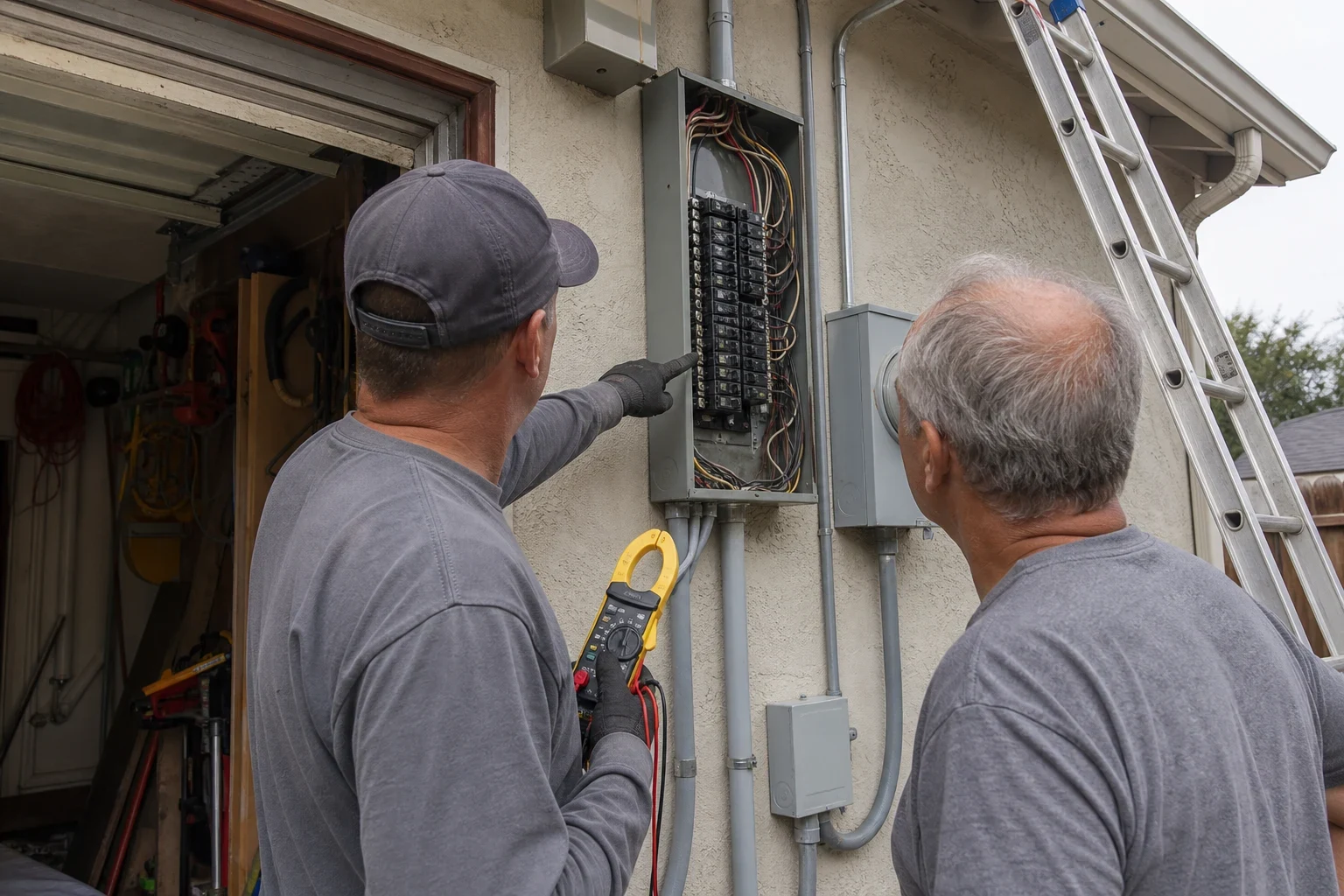
We open the panel, test connections, and look at the wiring feeding it. You get our findings and a written estimate before any work is approved.
- 2
Permit and scheduling
We file the permit and pick a work day with you. If the utility needs to pull the meter, we line that up for the same day.
- 3
Swap day
Power is off while we work, usually for most of the day. We protect the floor near the panel, move each circuit to the new panel, and torque every connection to spec.
- 4
Power back on and testing
We restore power one circuit at a time and check that each one works. Then we walk you through the new labels.
- 5
Inspection
The inspector checks the work. If anything is flagged, we fix it and get it signed off.
Panel Upgrade Questions
How long does a panel change take?
Most straight swaps take one working day. Upgrades that need a new meter base or service wires can run longer. We give you the plan for your job after the inspection.
Do you pull the permit?
Yes. We file it with the office that covers your address and get the inspector on the calendar. You do not have to deal with the paperwork.
Do I need 200 amps?
Not always. Plenty of homes run fine on less. The load calculation tells us what you need now and what you would need for an EV charger, a battery backup system, or a generator later.
Can you just replace the bad breaker?
If the panel is in good shape and the breakers are still made, yes. We would rather fix one part than sell you a panel you do not need. If the bus bar is burned or the brand is known for problems, we will explain why replacement makes more sense.
Will I have power during the work?
No. The whole house is off while we move circuits. Plan for the fridge to stay closed and anything sensitive to be unplugged. We get power back as soon as it is safe.
Find Out What Your Panel Really Needs
We look first, test the load, and tell you whether a new panel is the fix. Then you decide.