ServicesGenerator Service & Repair
Generator Service & Repair in Benbrook
When your standby generator won't start, shows a fault light or quits under load, we find out why before we replace anything. We test the battery, engine, controller and transfer switch. Then we tell you what failed and what it takes to fix it.
Get your backup power working the way it should
A home generator sits idle for months, then has to carry your home the moment the grid drops. That long wait is hard on it. Batteries weaken, oil breaks down, and small wiring problems stay hidden until the day you need power.
We service and repair standby generators and the transfer switches that run them. Most of the trouble we see comes down to a few things: a tired starting battery, a loose or corroded connection, a clogged filter, or a transfer switch that never got tested. We check each one in order, so you pay to fix the real problem and not a guess.
If you have a portable generator with an inlet and interlock, we check that hookup too. New setups are covered on our Generator Installation page.
What a service visit covers
- Battery and charger test
- We put the starting battery under a real load and confirm the charger is keeping it full. When a standby unit just clicks or cranks slowly, the battery is our first stop, and most of the time it's the culprit.
- Oil, filters and plugs
- We change the oil and oil filter, replace the air filter, and check or replace spark plugs on the maker's schedule. Old oil and a dirty air filter make an engine run hot and hard.
- Transfer switch under load
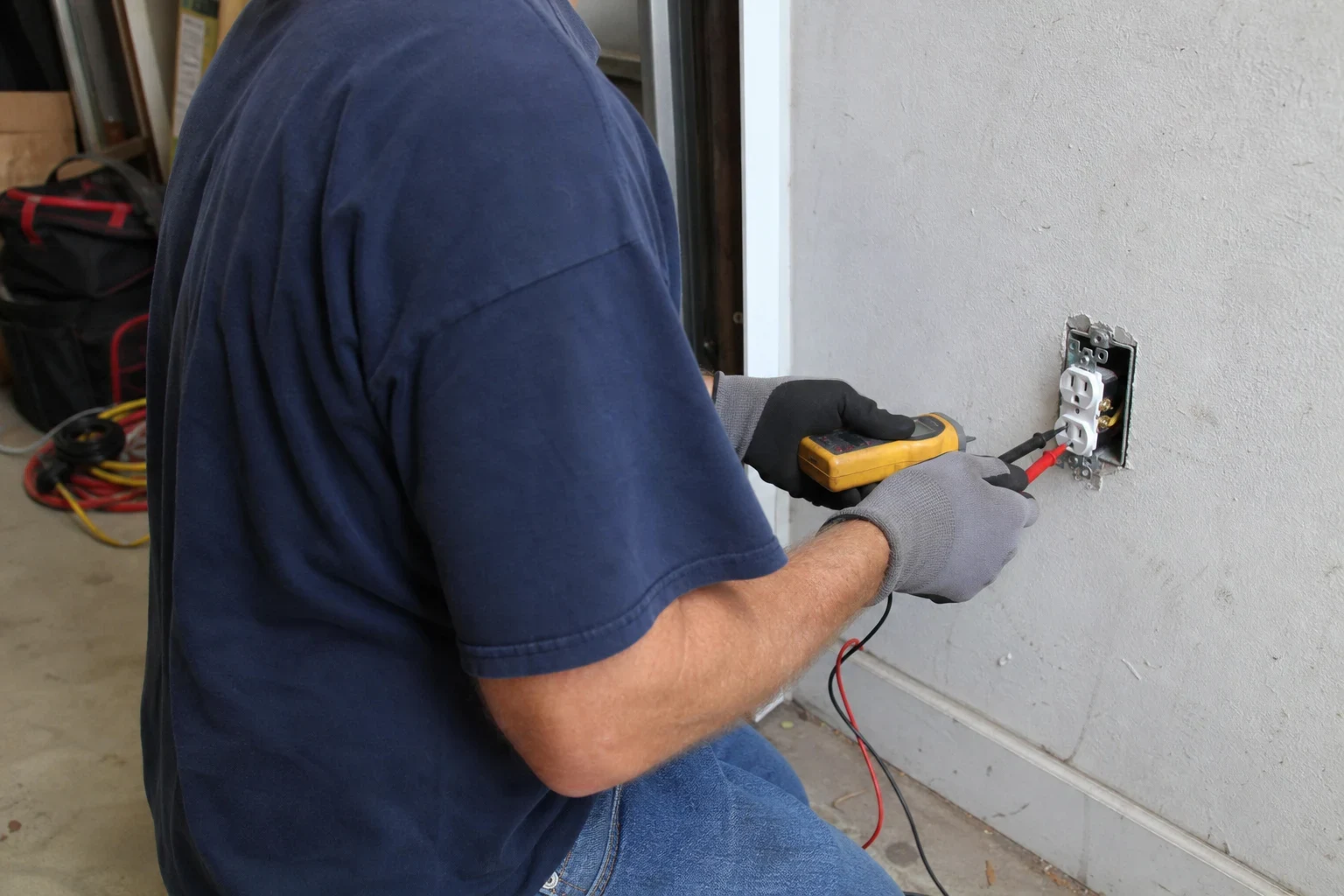
- We run a real transfer so your home actually switches to generator power and back. We tighten lugs and look for heat damage inside the switch.
- Controller log and fault codes
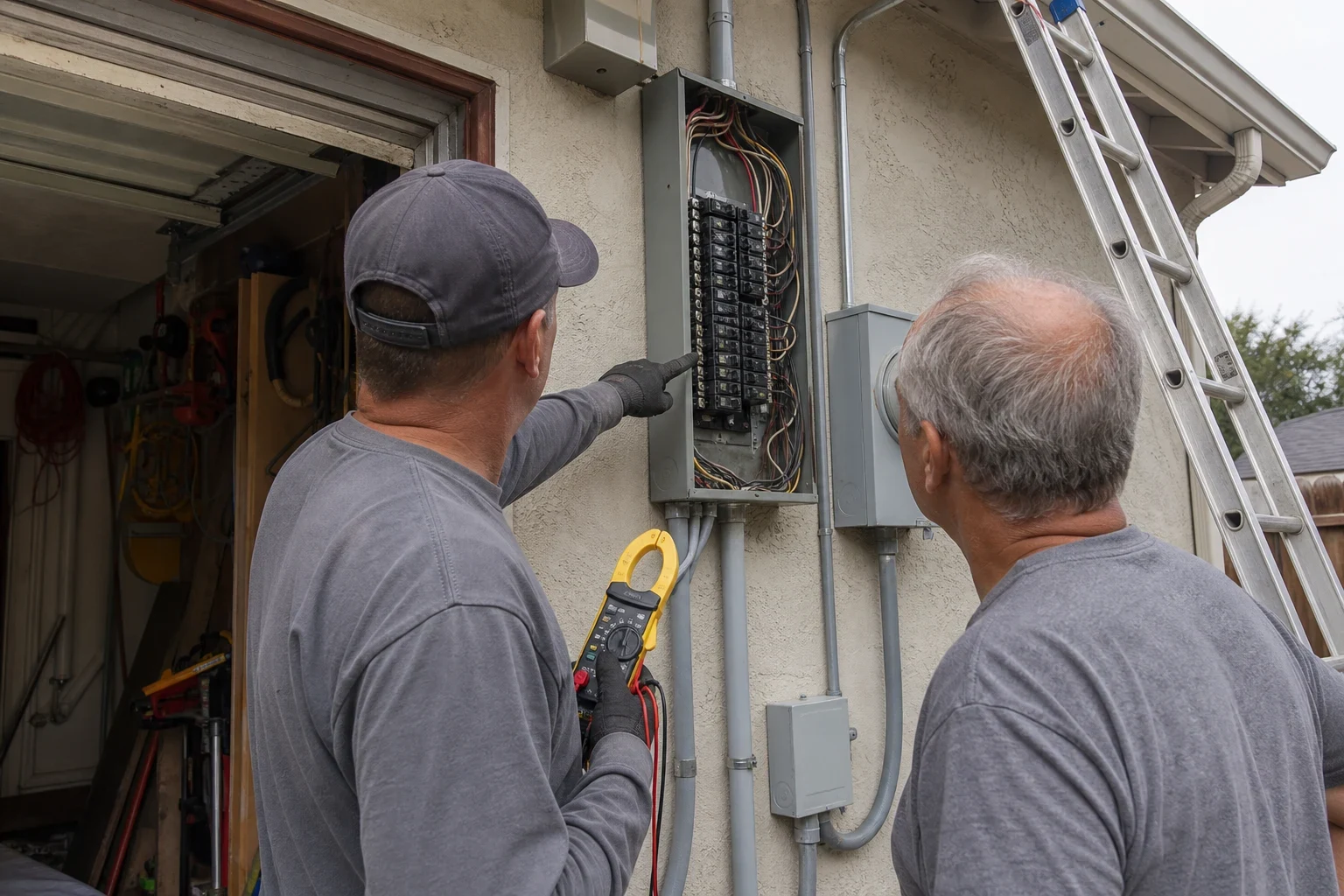
- We read the controller's event history and any stored codes. That log often points straight at the cause, like low oil pressure, overcrank or a voltage problem.
- Wiring and enclosure check
- We look over control wiring and connections for chewed insulation, corrosion and nests. Insects and rodents like the warm, quiet space inside a generator housing.
- Plain written findings
- You get a short list of what we found, what we fixed and anything that can wait.
Signs your generator needs a look
It skips its weekly exercise
Most standby units run a short test cycle on their own. If yours has gone quiet on test day, something is stopping it, and it will stop it during an outage too.
A warning light or fault code
A red or yellow light on the controller means the unit logged a problem. Clearing it without finding the cause usually means it comes back.
It starts, then shuts down
A unit that cranks and dies, or runs a few minutes and stops, may be seeing low oil, a fuel supply issue or a bad sensor.
The house never switches over
If the generator runs but your home stays dark, the transfer switch or its control wiring is the first suspect.
Lights flicker on generator power
Unsteady voltage can come from a governor problem, a loose connection or more load than the unit can carry. It is hard on electronics and motors.
No service in over a year
Even a unit that seems fine needs fresh oil, filters and a battery check. Long summer heat in a metal box outside wears batteries down faster than you'd think.
What affects the cost
We don't price a generator repair until we know what's wrong. A dead battery and a failed control board are very different jobs. After the diagnosis, we explain the work and the cost before we start.
Make, model and age
Parts for common brands are easy to get. Older or discontinued units can need parts that take longer to find or cost more.
What actually failed
A battery, filter or plug is a quick fix. Controller boards, voltage regulators and transfer switch parts take more time and money.
Tune-up or repair
A scheduled tune-up is a set list of tasks. A repair starts with diagnostic time to trace the fault.
Access and condition
A unit tight against the house, buried in shrubs or heavily corroded takes longer to work on safely.
Where the fault sits
If the trouble is the gas supply and not the generator, the fuel side may need a gas line pro. We'll tell you if that's where the problem is.
How a repair visit goes
- 1
You tell us what happened
When you call, we ask about the make, the age and what the unit did or didn't do. That helps us bring the right parts and tools.
- 2
We test before we take anything apart
On site we read the controller log, test the battery, check fluids and run the unit. We watch it start, run and transfer before we open anything up.
- 3
We show you the cause
We explain what failed and why, with the readings to back it up. If a repair won't hold on an older unit, we tell you that too.
- 4
We fix it and run it again
Once you approve the work, we make the repair and run a full test with your home on generator power. We clean up and leave the unit set to exercise on schedule.
Generator service questions
How often should my standby generator be serviced?
Plan on a visit every twelve months for most units. If it logs a lot of run time before then, the maker may want it serviced earlier. After a long outage where it ran for days, have it checked sooner. Your owner's manual lists the exact schedule for your model.
Can you work on my brand of generator?
We work on the common air-cooled standby units, along with the switches that hand your home over to them. Have the brand and model number handy when you phone. If a unit needs factory-only parts or software, we'll say so before we come out.
My generator runs but the house didn't switch over. Is the generator bad?
Often it isn't. The transfer switch, its control wiring or a controller setting can keep power from reaching your home. We test the switch under load to find out which one it is.
Is it worth repairing an old generator?
Sometimes yes, sometimes no. If the engine runs well and the fault is a part like a battery or a board, repair usually makes sense. If the engine is worn and parts are scarce, we'll show you why and talk through options, including Generator Installation or Home Battery Backup Systems.
Do I need to be home for the visit?
It helps for the start so we can hear what happened and run a transfer test. Your power will blink when we do that, so we'll let you know first. Once the testing is done, you don't need to stand over us.
Find out why your generator isn't working
Book a service visit and we'll test the unit, find the cause and explain the fix before any work starts. Better to know now than during the next outage.