ServicesWhole-Home Rewiring
Whole-Home Rewiring in Benbrook
Old wiring does not always fail loudly. We test every circuit in your home, show you what is worn out and what still holds up, then replace it with new grounded wiring. You get a plan in writing before any wall gets opened.
When Rewiring Is the Right Call
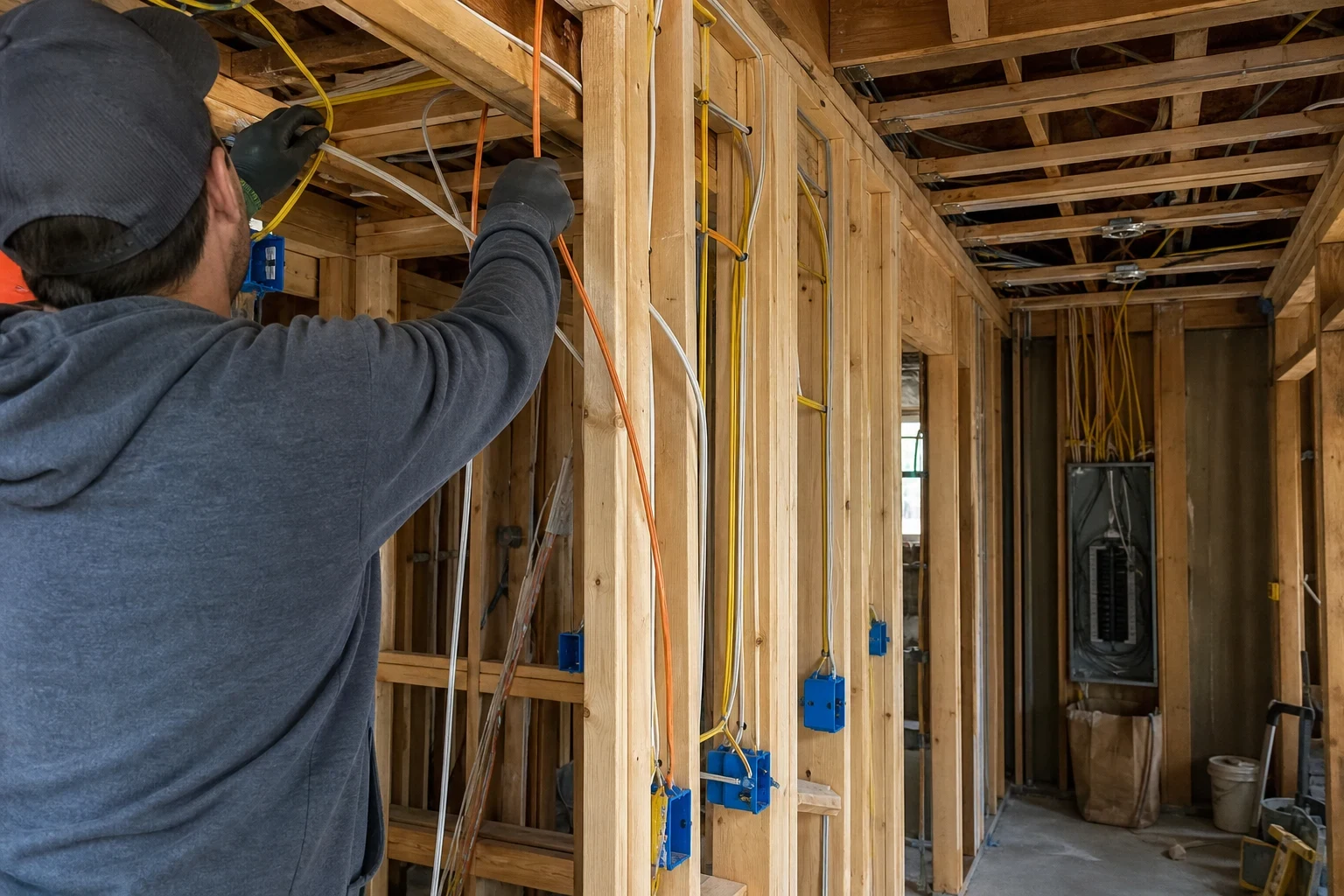
A whole-home rewire means pulling out the old branch circuits and running new wire to your outlets, switches and fixtures. It is a big job. So we do not start by selling it. We start by testing.
Plenty of homes only need a few bad circuits replaced or a handful of loose connections fixed. If that is your house, we will tell you, and our electrical repair work covers it. A full rewire makes sense when the wire itself is the problem: brittle cloth insulation, ungrounded two-wire runs through most of the house, aluminum branch wiring, or years of add-ons spliced in by different hands.
Once we know which one you have, you can decide with real information instead of a guess.
What a Rewire Includes
- Circuit testing and mapping
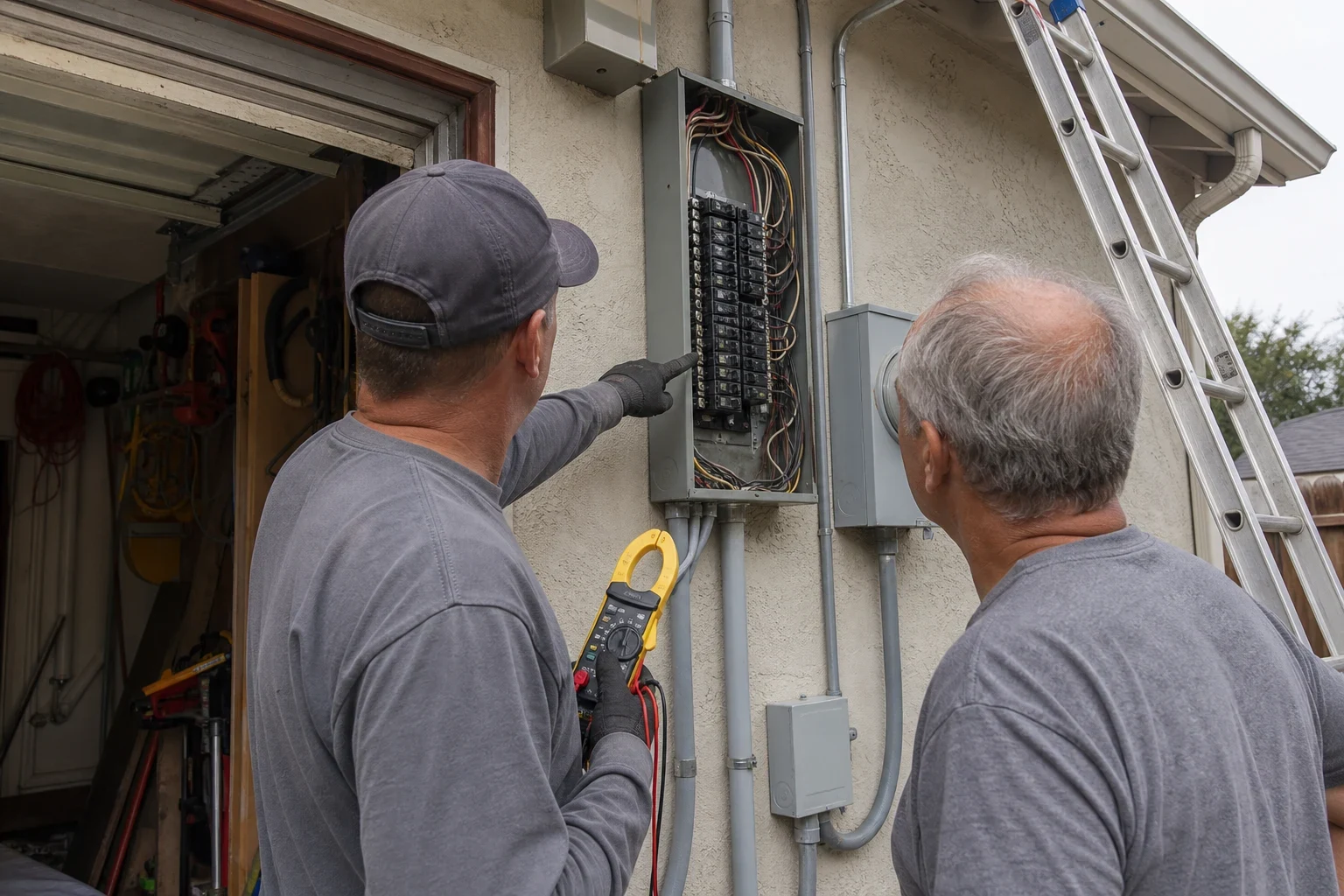
- We test each circuit for insulation breakdown, grounding and loose connections. Then we map which outlets and lights sit on which breaker, so the new layout fixes overloaded circuits instead of copying them.
- New copper wiring
- Old runs come out where we can reach them and are abandoned safely where we cannot. New copper wire goes in, sized for the load each circuit will actually carry.
- Grounded outlets and new boxes
- Two-prong outlets get replaced with grounded ones. We add GFCI and AFCI protection where code calls for it, like kitchens, baths, laundry and bedrooms.
- Dedicated circuits where you need them
- Window units, microwaves, freezers and space heaters often share one tired circuit in older homes. We give the heavy hitters their own lines.
- Permit and inspection
- We pull the permit and schedule the inspections required by the local jurisdiction. Walls stay open until rough-in passes.
- Panel check
- New wiring needs a panel that can feed it. If yours is undersized or worn, we will explain the options, and our panel upgrades page covers that work.
Signs Your Home May Need New Wiring
Lights dim when things kick on
A flicker when the AC or a hair dryer starts can mean overloaded circuits or loose connections at old splices.
Warm outlets or switch plates
A cover that feels warm to the touch points to heat at the connection. That is worth a test soon.
Two-prong outlets almost everywhere
Ungrounded outlets mean no ground path for faults. Adapters do not fix that.
Cloth or crumbling insulation
If you see fabric-wrapped wire in the attic or at a box, the insulation may break when it is moved.
Aluminum branch wiring
Aluminum branch circuits loosen at connections over time as they heat and cool. We check how much of the house has it and how the ends look.
A trail of DIY fixes
Extension cords used as permanent wiring, mystery junction boxes and breakers that trip for no clear reason all suggest the system has been patched too many times.
What Moves the Price
Every house is wired differently, so we price a rewire after we have tested and seen it. The written estimate lists each part of the job. If something changes once walls are open, we show you and talk it over before doing more.
Size and number of circuits
More rooms and more outlets mean more wire and more labor. Adding circuits for modern loads adds to the count.
Access
An open attic with good clearance makes runs quick. Low attics, slab floors and finished ceilings take more time and more careful openings.
Wall repair
We keep openings small, but some patching is part of most rewires. We will tell you up front how many openings to expect.
Panel condition
If the panel cannot safely feed the new circuits, replacing it becomes part of the job.
Permits and inspections
Permit fees and inspection visits are set by the local jurisdiction and are listed in the estimate.
How a Rewire Job Runs
- 1
Test and walk through
We test the circuits, look in the attic and at the panel, and take photos of what we find. Then we sit down with you and go over it.
- 2
Written scope
You get a written plan that lists the circuits, outlets and protection we will add, plus what the walls will need. Nothing starts until you approve it.
- 3
Rough-in, a few rooms at a time
We work in sections so you keep power in most of your home each day. We fish wire through attics and walls to keep openings small, cover floors and clean up at the end of each day. In summer we do attic work early, before the heat builds.
- 4
Inspection and trim-out
After rough-in passes inspection, we set devices, connect fixtures and test every circuit again. Then the final inspection.
- 5
Walkthrough
We show you the new breaker layout and hand you a labeled panel directory, so you know what each breaker runs.
Rewiring Questions We Hear
Can I stay in my home during a rewire?
Most people do. We open up a few rooms at a time, and before we leave each evening the sections we finished are wired back up and live. One part of the house may be without power for some of the day, and we let you know which part before we begin.
How many days should I plan for?
Square footage, attic room and the number of circuits on the plan drive most of the timeline. The inspector's calendar matters too, since nothing gets closed up until the rough-in inspection passes. After we test your home, the written estimate comes with a working schedule you can plan around.
Do you have to tear out my walls?
No. We fish most wire through attics and wall cavities and cut small openings at boxes and corners. Some patching is normal, and we point out the spots before we start.
Is it really the whole house, or can you just do part of it?
Sometimes part is enough. If testing shows only certain circuits are failing, we can replace those and leave the sound ones alone. We will tell you which approach fits what we found.
Will a rewire help me add an EV charger or generator later?
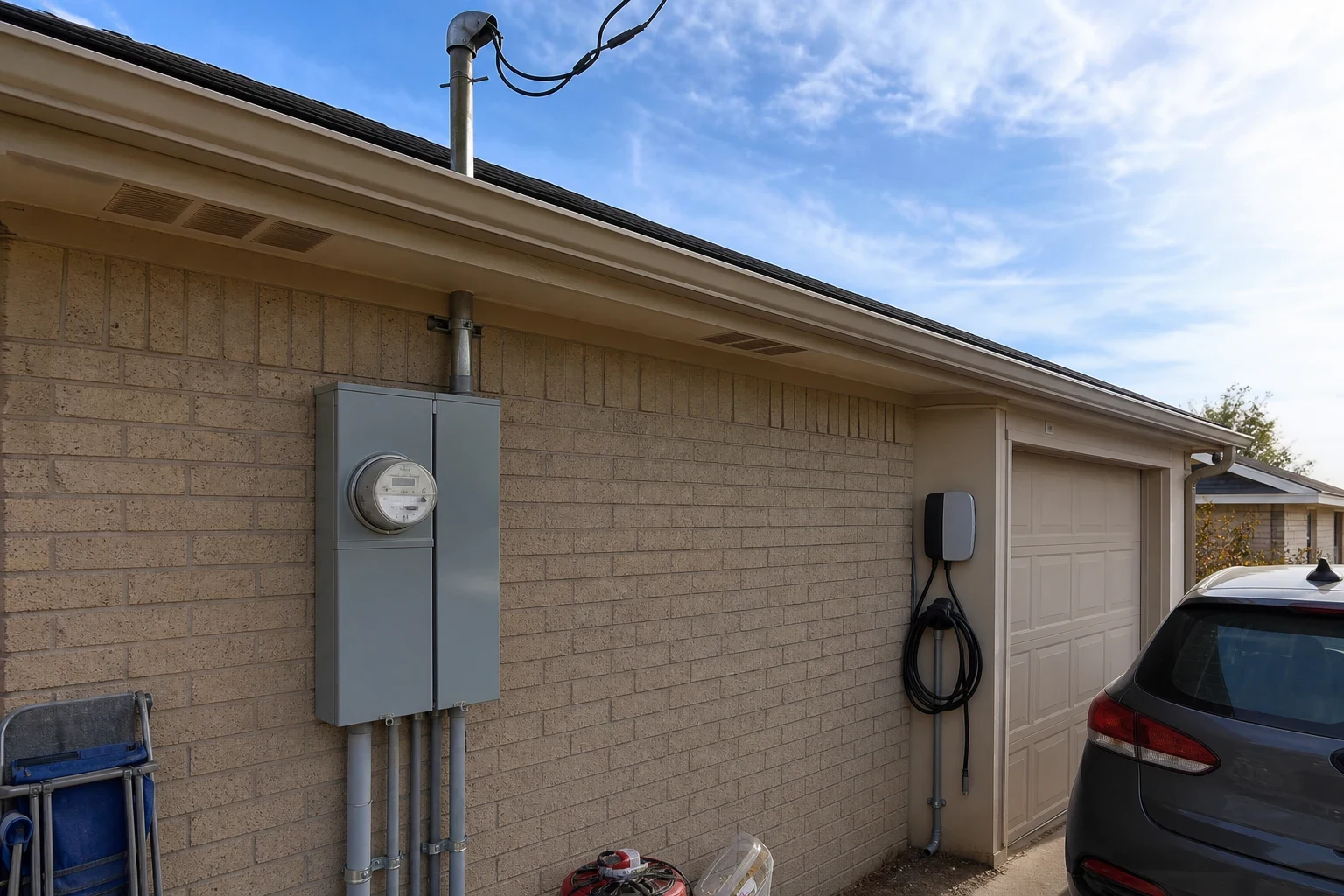
It can. We plan the panel and circuits with room for future loads, so later jobs like EV charger installation or generator installation go in cleaner.
Find Out What Your Wiring Needs
We test first, show you what we found, and give you a written plan. Then you decide.