ServicesSurge Protection
Surge Protection in Benbrook, Installed at Your Panel
We install whole-home surge protection at your electrical panel and test the grounding behind it, because a surge device only works as well as its path to earth. You get one protector covering the whole house, plus advice on where plug-in protection still makes sense.
What surge protection does and when it makes sense
A surge is a short spike in voltage. Some come from outside, like nearby lightning or switching on the utility lines. Most start inside your home, every time a big motor like the AC compressor cycles on and off. One big spike can kill a circuit board in a second. Small ones wear electronics down over years.
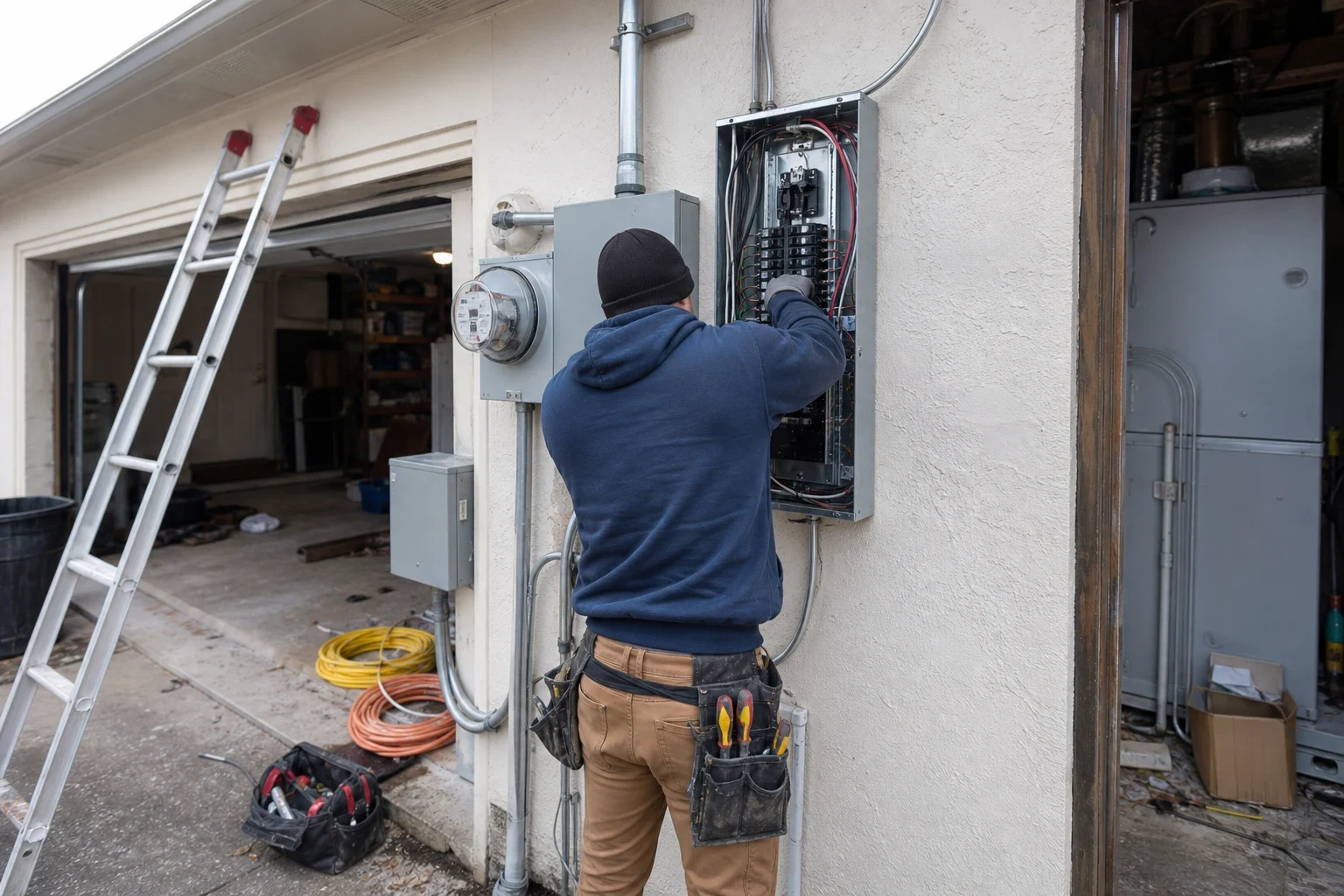
A whole-home surge protective device mounts in or next to your panel. It sends extra voltage to ground before it reaches your circuits. It covers things a plug-in strip never will, like the furnace control board, the oven, the garage door opener and the thermostat.
Before we install anything, we test the grounding and bonding. A protector tied to a loose clamp or a corroded ground rod has nowhere to send the surge. If something in your home already failed, we look at why, so you're not buying a device and hoping it was the problem.
What the work includes
Grounding and bonding check
We check the ground rod connection, the bond to your water and gas piping, and the neutral-to-ground bond in the main panel. Loose or corroded connections get fixed first. Most people never see this part, and it decides whether the protector does its job.
Whole-home device at the panel
We mount a surge protective device on its own breaker or the panel terminals. We keep the leads short and straight. Long, looped wires slow the surge path and cut the protection.
Point-of-use advice
A panel device knocks down the big hits, but sensitive gear still benefits from a good plug-in protector. We'll tell you which spots are worth it, like the TV and computer area, and which aren't.
Cable and low-voltage entry check
Surges can ride in on coax and other low-voltage lines. We check that those lines are grounded where they enter your home, so there's no back door around the panel device.
Status light walkthrough
Most devices have an indicator that shows they're still working. We show you where it is and what it should look like.
Signs your home could use surge protection
- Electronics dying early
- If chargers, TVs or appliance boards keep failing before their time, repeated small surges are a likely cause. We also check for a loose neutral, which can look similar and needs a different fix.
- A storm took something out
- Benbrook gets its share of spring thunderstorms and nearby lightning. If one storm fried a router or a garage door opener, the next one can reach costlier equipment.
- Lights flicker hard when the AC starts
- A quick dim when a big motor starts is common. Strong or frequent flicker can point to a connection problem, and we'll track it down during the visit.
- New appliances full of circuit boards
- Modern washers, ranges, HVAC systems and EV chargers all run on electronics. A panel device costs little next to replacing one of those boards.
- A panel replacement is coming up
- Newer editions of the electrical code call for surge protection when a service is replaced. If you're planning a panel upgrade, that's a good time to add it.
How a surge protection visit goes
- 1
Look and test first
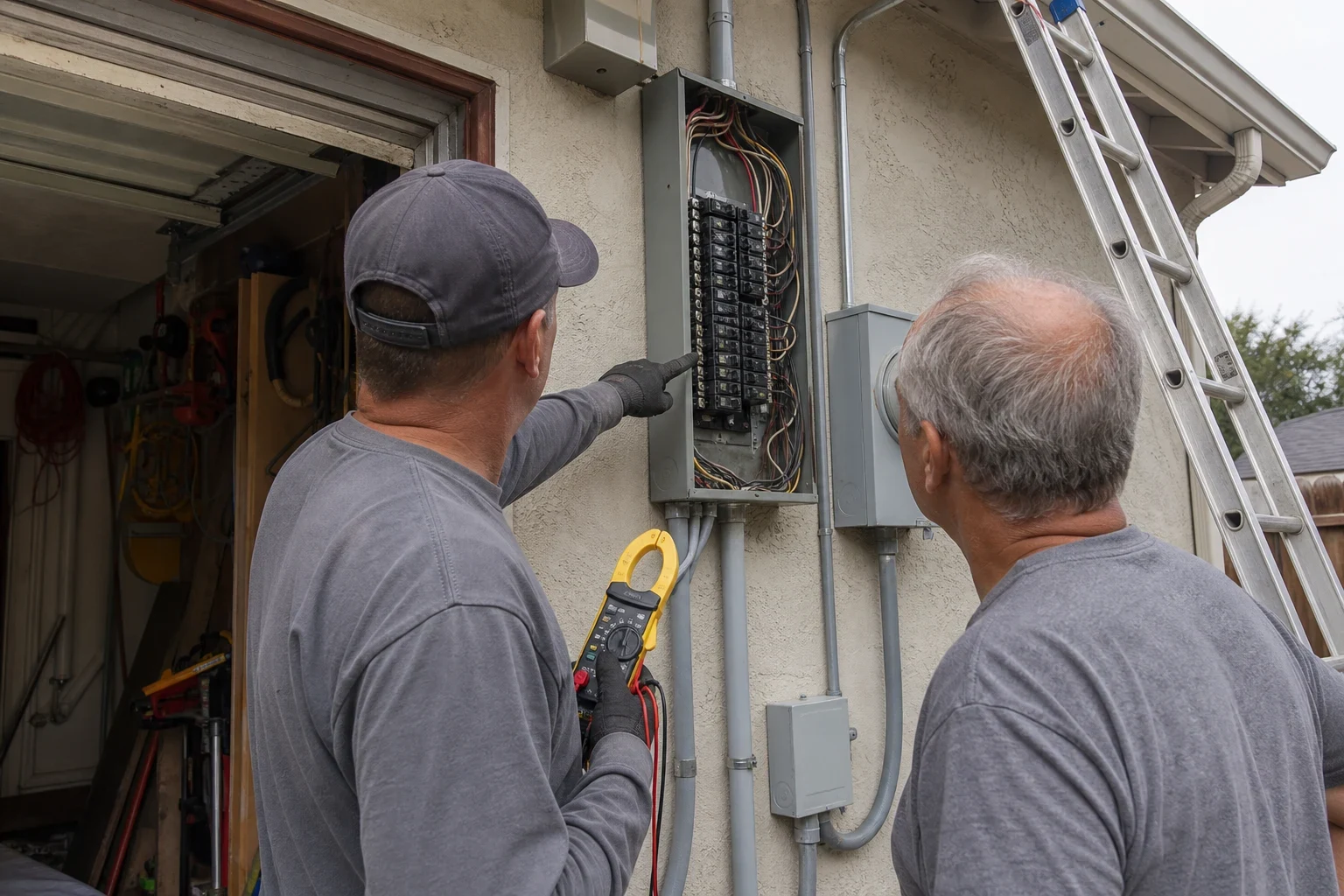
We open the panel and check the open spaces, the breakers and the condition of the connections. We test grounding and bonding and ask what has failed lately.
- 2
Tell you what we found
You hear what's sound, what needs fixing and which device fits your panel. You get the price before we start.
- 3
Install and correct the grounding
With your OK, we shut off power, install the device and fix any grounding or bonding problems. We tell you before the power goes off, and it stays off only while we work inside the panel.
- 4
Check it and clean up
We power back up, confirm the indicator shows the device is protecting, and make sure your circuits came back on. If your local jurisdiction requires a permit and inspection, we handle it. The cover goes back on and the work area gets cleaned.
What affects the price
Most surge protection jobs are straightforward, but no two panels are set up the same. We look at yours before we price the work. You know the total before anything starts.
- Panel space and brand
- Many devices need an open two-pole breaker slot. A full panel may need some rearranging. Older or discontinued panels can limit which devices fit.
- Grounding repairs
- A loose ground rod clamp, a missing bond to the water line or an undersized ground wire adds time and material. It's also the part that matters most.
- Type of device
- A unit inside the panel and one mounted beside it are priced differently. We'll say which suits your setup and why.
- Extra protection points
- Adding protection at the cable entry or for specific electronics adds a bit to the job. We only suggest it where it pays off.
- Permit requirements
- When the local jurisdiction requires a permit, the fee and inspection are part of the cost.
Surge protection questions
- Isn't a power strip enough?
- A strip protects what's plugged into it and nothing else. It does nothing for the AC, furnace, oven or hardwired lights. Cheap strips also wear out without telling you. A panel device plus a few good strips at your electronics is the better setup.
- What happens if lightning hits my house directly?
- Honestly, a bolt that lands on your roof or service line carries far more energy than any residential surge device is rated to handle. We won't sell it to you as lightning armor. Its real job is the hits that happen all the time: storms a few miles away, the utility switching its lines, and your own AC and well pump cycling. Those are what slowly or suddenly ruin circuit boards.
- How long does a whole-home surge protector last?
- It depends on how many surges it absorbs, since each one wears it a little. The status light tells you when it's spent. We show you how to check it, and swapping it out is a short job.
- Can you add surge protection to my existing panel?
- Usually, yes. We need room for the device and a panel in decent shape. If the panel is damaged or has a known problem, we'll say so plainly and talk through a panel upgrade or electrical repair instead.
- I have a standby generator. Does that change anything?
- It's worth a look. Transfer switches and generators have their own electronics. We check how your generator is tied in and place the protector so both power sources are covered.
Protect the gear you already own
We'll test your grounding, check your panel and tell you what it takes to cover your whole home. You'll know the price before any work starts.