ServicesHome Battery Backup
Home Battery Backup Systems in Benbrook
A battery backup keeps your fridge, lights, internet and other key circuits on when the power goes out. We start by measuring what your home really uses, so the system you get is sized right and wired right the first time.
Quiet Backup Power, Sized From Real Numbers
A home battery stores power and hands it back to your home the moment the grid fails. No engine, no fuel, no noise. The switchover is fast enough that most clocks and routers never notice.
The hard part is sizing. A battery that is too small drains in a few hours. One that is too big costs more than it needs to. So before we talk about any equipment, we look at your panel, your circuits and what you want to keep running. Then we tell you plainly what a battery can and can't carry in your home.
Texas summers push air conditioners hard, and that is usually the biggest load a battery has to think about. We will show you whether keeping the AC on is realistic or whether a smaller set of backed-up circuits makes more sense for you.
What the Work Includes
- Load review
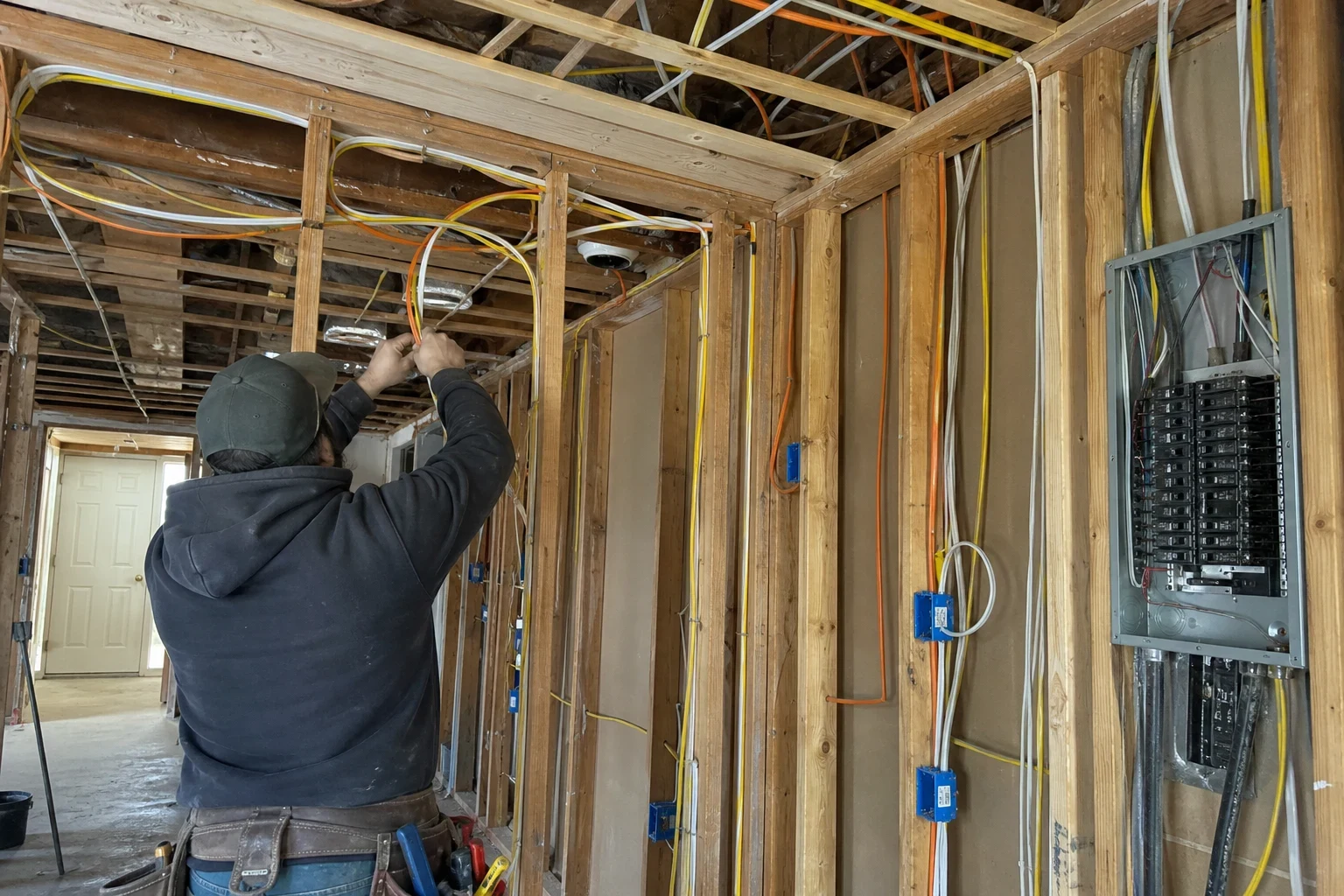
- We go through your panel circuit by circuit and note what each one feeds. We also look at large motor loads like a well pump or AC compressor, since they pull a big surge at startup.
- Panel and service check
- We check the condition of your panel, the breakers and the main service. If the panel can't safely take the battery tie-in, we tell you before anything is ordered.
- Backed-up circuit setup
- Most systems feed a separate subpanel that holds the circuits you chose to protect. We move those circuits over and label everything clearly.
- Mounting and wiring
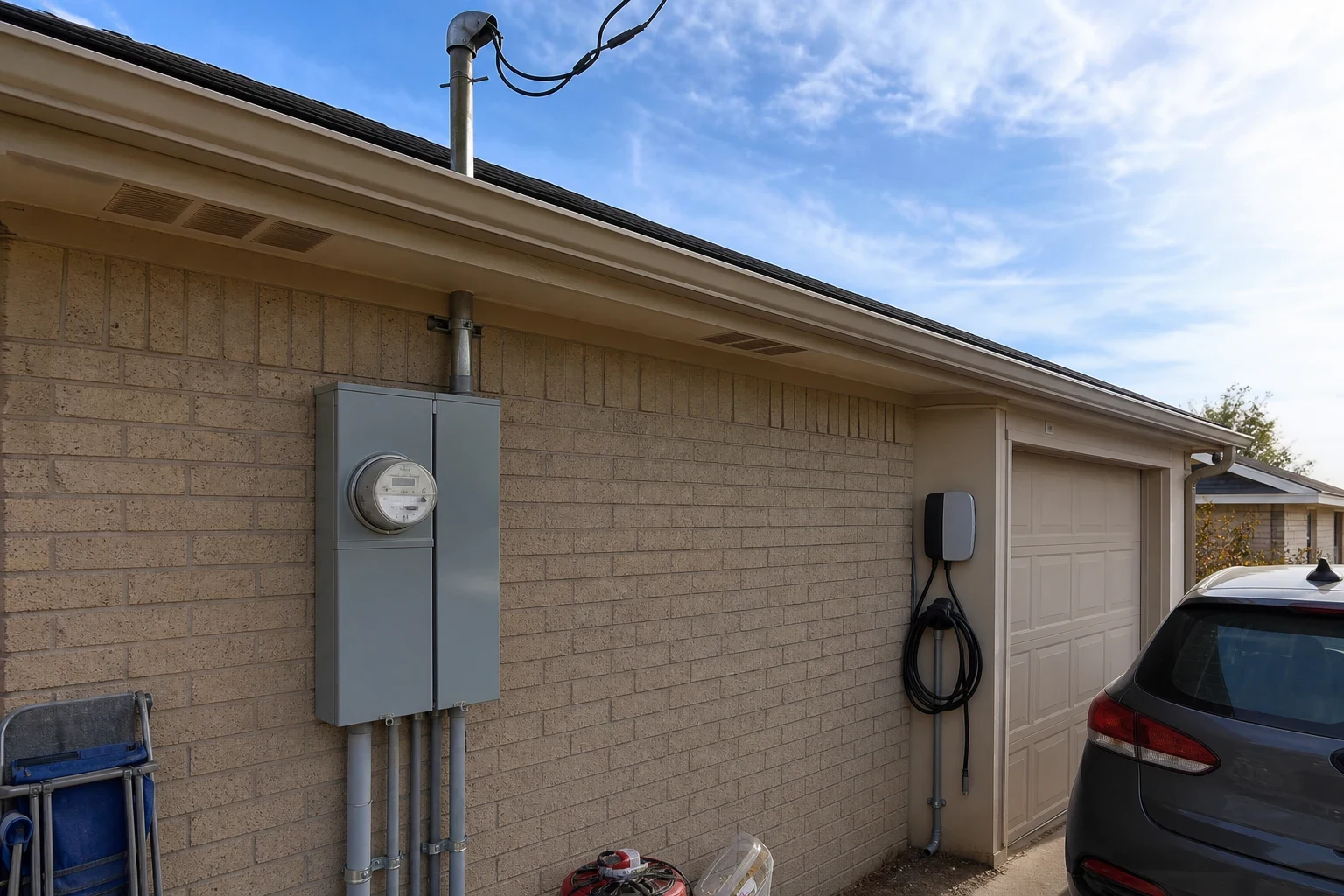
- We mount the battery and inverter in a spot that meets clearance rules, run the conduit and make every connection to spec. Outdoor runs are sealed against rain and sun.
- Permit, inspection and utility steps
- We handle the permit paperwork and book the inspection, following whatever the local building office asks for. If the utility wants forms or an approval before the system goes live, we take care of that as well.
- Outage test and walkthrough
- Before we leave, we cut the grid feed and watch the system take over. Then we show you how to read the battery status and what to expect during a real outage.
Signs a Battery Backup Makes Sense
Losing groceries or a workday
When the lights go out for an afternoon, the fridge warms up and a home office goes dark. A battery is built to carry you through exactly that kind of stretch.
Someone needs powered equipment
Medical devices, a CPAP or a sump pump can't wait for the lines to come back. A battery picks them up without a delay.
You don't want a generator
Some homeowners don't want fuel, engine noise or monthly run tests. A battery runs silent and has no fuel to store.
Your generator only handles part of the job
A battery can bridge the gap while a generator starts, or carry light loads overnight so the generator isn't running for a single fridge.
Storms keep knocking the power out
Spring storms bring frequent short outages. A battery is built for those, kicking in fast and recharging once power returns.
How a Battery Backup Job Runs
- 1
Service visit and measuring
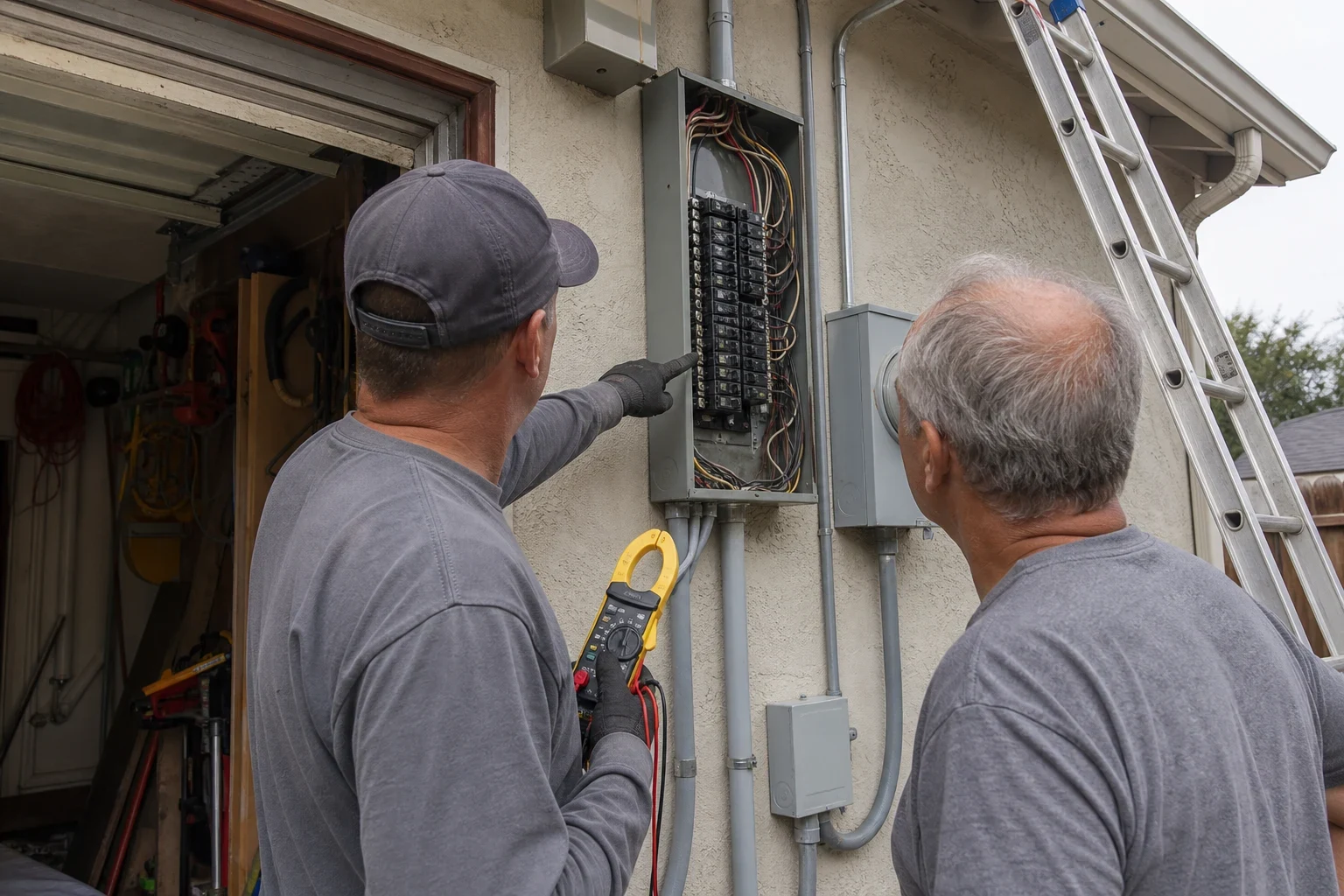
We come out, open the panel and look at what you have. We ask what you want to keep on and check the actual loads against that list.
- 2
Plain recommendation
You get a straight answer on battery size, which circuits to back up and whether the panel needs work first. If a battery is the wrong fit, we say so.
- 3
Paperwork and a work date
Next we get the permit filed and pick a day that suits you for the install. You'll know in advance when the power will be shut off and roughly for how long.
- 4
Install day
We mount the equipment, build the backed-up subpanel and wire it all in. Drop cloths go down anywhere we work indoors. Boxes, wire scraps and packing material leave with us at the end of the day.
- 5
Inspection and handoff
After the inspection passes and any utility steps are done, we run a live outage test with you and answer your questions.
What Moves the Price
Battery jobs vary a lot from one home to the next. Most of the cost comes from how much storage you need and how much wiring it takes to tie it in. We give you a written breakdown after the service visit so you can see where every dollar goes.
- Storage capacity
- More hours of backup or bigger loads mean more battery. Backing up the whole home costs more than a short list of key circuits.
- Panel condition
- An older or full panel may need replacing or upgrading before a battery can tie in. We check this first so it isn't a surprise later.
- Mounting spot and wire runs
- A battery close to the panel takes less wire and conduit. A long run around the house or through finished walls adds labor and material.
- Large startup loads
- Running central AC or a well pump may call for extra inverter capacity or a soft-start device on the motor.
- Permit and utility requirements
- Permit fees and any utility paperwork are part of the job. We list them in the written estimate so they don't show up later as an extra.
Battery Backup Questions
Something not covered here? (682) 327-1771
How long will a battery keep my home running?
It depends on the battery size and what you have turned on. A fridge, lights, internet and a few outlets can run for a long stretch. Add central AC and the hours drop fast. We work out the numbers from your actual loads during the service visit.
Can a battery run my central air conditioner?
Sometimes. AC pulls a big surge when it starts, and the battery and inverter have to handle that surge as well as the steady draw. We check your unit and tell you honestly whether it is practical or whether a fan and a smaller set of circuits is the better plan.
Should I get a battery or a generator?
A battery is quiet, needs no fuel and switches over fast, but it holds a fixed amount of energy. A generator can run for days as long as it has fuel. If long outages are your main worry, look at our Generator Installation page too. Some homes use both.
Will I need a panel upgrade first?
Many homes don't. A panel in decent condition with open space can usually take the battery tie-in as it is. If yours is worn out, packed full or too small for the job, we'll show you what we found and go over Panel Upgrades before any battery work begins.
Do you pull the permit?
Yes. We file the permit, meet the inspector and handle any utility steps the job needs. You don't have to deal with the paperwork.
How long does the install take?
Most installs take a day or two on site, plus time for the permit and inspection. We give you a schedule before we start and let you know when your power will be off.
Find Out What a Battery Can Do for Your Home
We will look at your panel, measure your loads and tell you straight what size makes sense. No guessing, no oversized system.