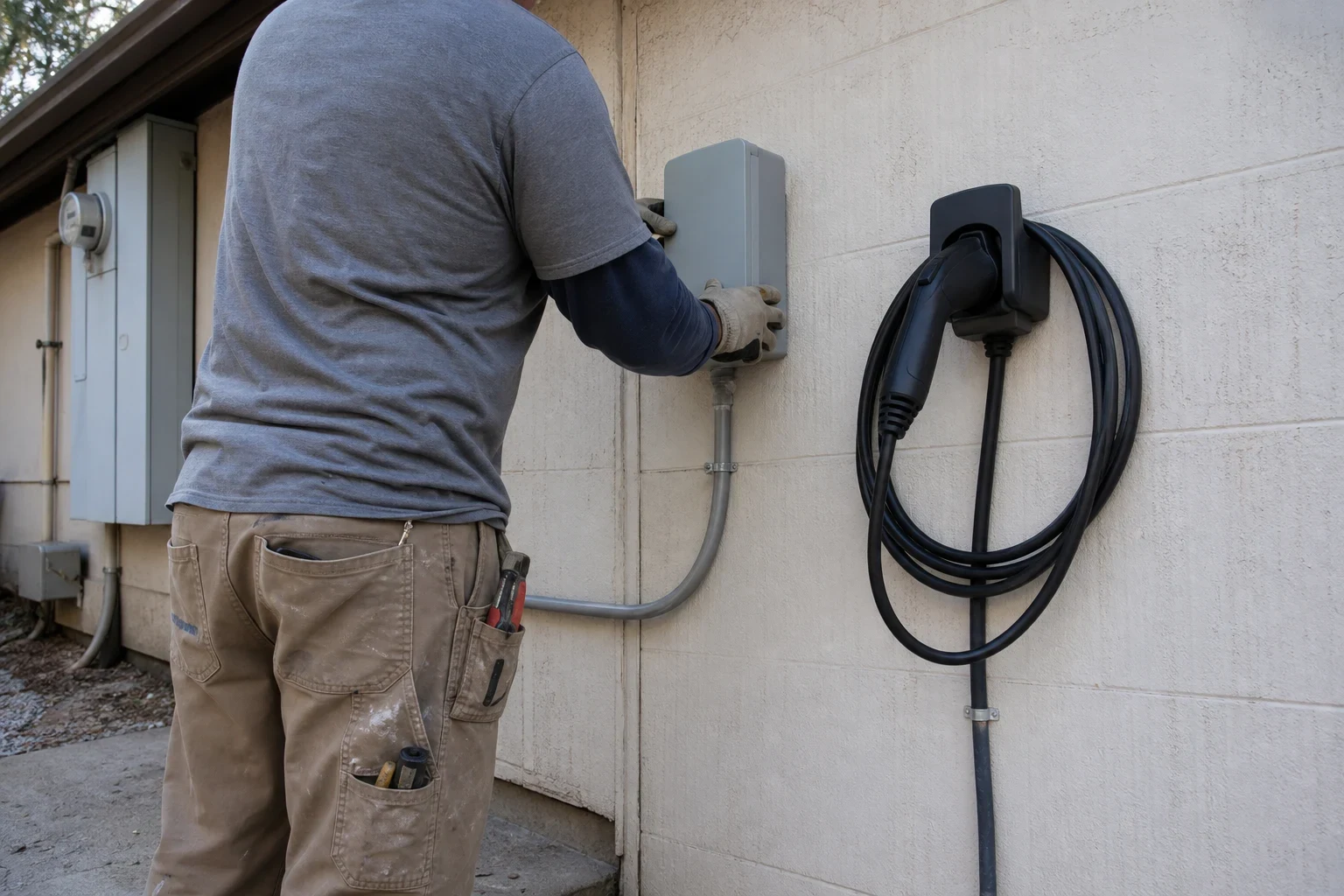
ServicesEV Charger Installation
EV Charger Installation in Benbrook
We put in Level 2 chargers for your home, in the garage or outside by the driveway. Before we quote a breaker size, we look at what your panel already carries. That way the charger runs at full speed and nothing else in the house trips.
A Charger That Fits Your Panel, Not Just Your Car
The cord that ships with most EVs plugs into an ordinary 120-volt outlet. That is slow charging, and a daily commute can outrun it. A Level 2 setup uses 240 volts, so most cars are full again by morning. It needs its own circuit, sized right, with the correct wire all the way from the panel.
The part people skip is the load check. Your panel already feeds the AC, the water heater, the dryer and the range. An EV charger pulls steady power for hours at a time, so it has to fit inside what the panel and service can handle. We add up the real load first. Then we tell you what size charger makes sense, and whether anything else needs to change.
Sometimes the answer is simple: open breaker spaces and plenty of capacity. Sometimes the panel is full or near its limit. Either way, you hear it before the work starts, not after a breaker starts tripping in August.
What the Install Includes
Load calculation
We look at your panel rating, your existing breakers and your big appliances. That tells us how many amps are left for charging.
Dedicated 240-volt circuit
A new double-pole breaker and copper wire sized for the charger. Charging counts as a continuous load, so we size the circuit with headroom built in.
Hardwired unit or 14-50 outlet
We can hardwire the charger you bought or install a NEMA 14-50 receptacle for a plug-in unit. We'll explain the trade-offs so you can pick.
Wire routing and conduit
Through the attic, along the garage wall or in conduit outside. We pick the cleanest route that keeps the wire protected.
Outdoor mounting
For driveway setups we use weather-rated boxes, fittings and conduit, and mount the unit where the cord reaches your charge port without a stretch.
Permit, testing and walkthrough
We handle the permit the way your local jurisdiction calls for it. Before we leave, we run a real charging session to confirm the circuit holds steady. Then we show you how the charger works.
Signs It's Time for a Level 2 Charger
- Overnight isn't enough
- You plug in every night and still wake up short. A standard outlet just can't keep up with a daily commute.
- Breaker trips while charging
- If a garage breaker trips when the car is plugged in, that circuit is shared or overloaded. That's a wiring problem to fix, not something to live with.
- Warm outlet or plug
- A plug or outlet that feels hot after charging is a warning. Long hours of steady current find any loose connection. Stop using it and have it checked.
- Extension cords in the garage
- Running the car's cord through an extension cord is a fire risk. A proper circuit at the parking spot ends that.
- Delivery date coming up
- If the car hasn't shown up yet, now is a good time to have the circuit put in. The first night it's parked at home, it charges at full speed.
How the Job Goes
- 1
Talk it through by phone
Tell us about the car, the charger if you have one, and where you park. We set up a service visit.
- 2
Look at the panel and the route
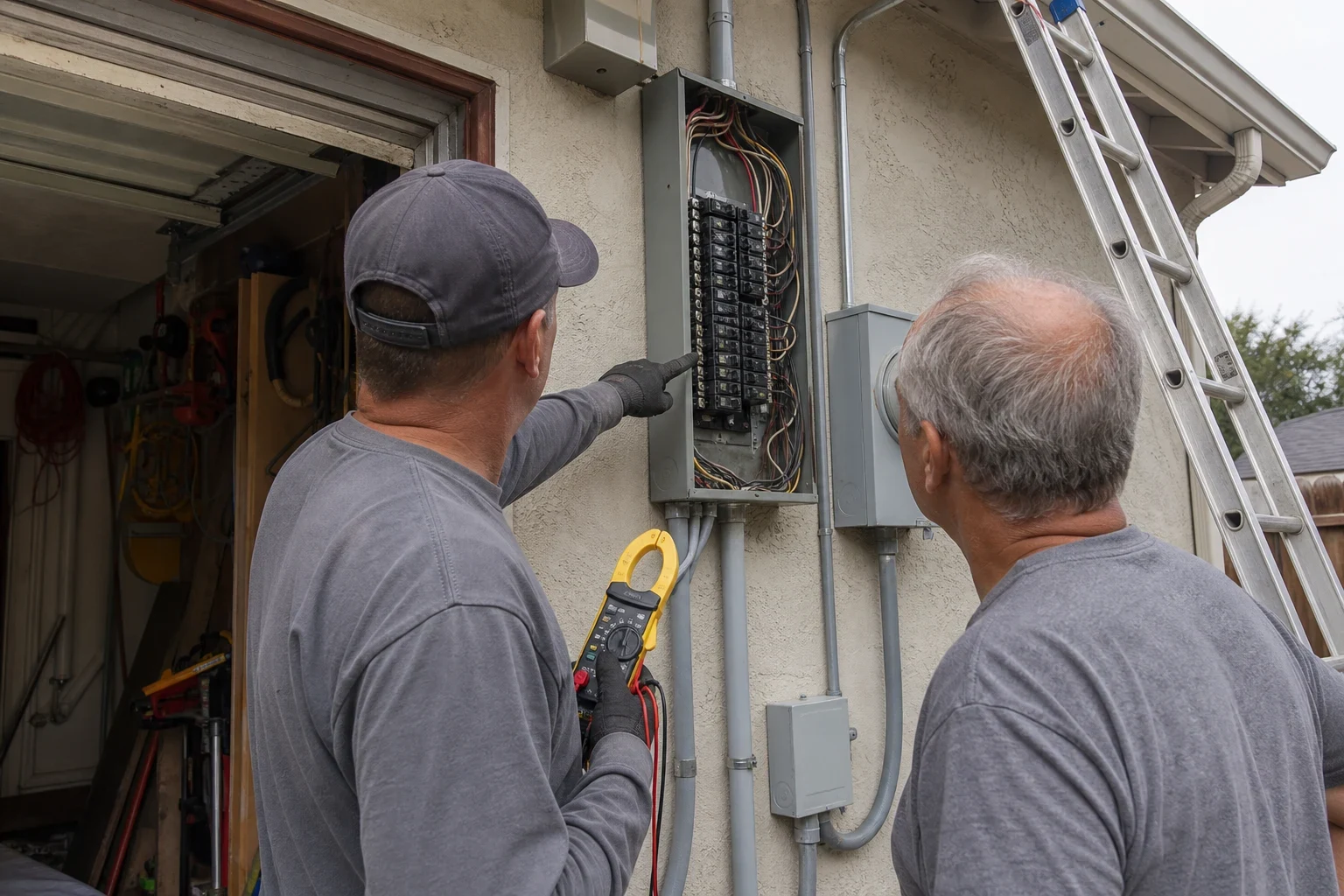
On the visit we open the panel, check the rating, count spaces and run the load numbers. We measure the path from panel to parking spot.
- 3
Lay out your options
You get a plain answer: what size circuit fits, how the wire will run and what it costs. If the panel can't carry it, we say so and explain what would.
- 4
Install day
Power goes off only for the stretch we're working in the panel. Most installs finish in one day. We clean up drywall dust and wire scraps before we go.
- 5
Inspection and handoff
We test the circuit, set the charger's amp limit to match the breaker and schedule the inspection as required.
What Moves the Price
No two installs cost the same, because no two panels and garages are set up the same. The biggest swings come from distance and from what your panel can already handle. We price it after the visit, once we've seen both.
- Distance from the panel
- A panel on the garage wall a few feet from the car is the easy case. A panel on the far side of the house means more wire, more routing and more labor.
- Panel capacity and space
- Open breaker spaces and spare capacity keep it simple. A full or maxed-out panel may need a load management device or a panel upgrade first.
- Circuit size
- A higher-amp charger needs heavier wire and a bigger breaker. We'll match the size to what your car can actually accept, so you don't pay for capacity it can't use.
- Inside or outside
- Outdoor installs need weather-rated parts and often conduit run along the wall, which adds material and time.
- Permit and inspection
- Permit fees and inspection scheduling depend on the local jurisdiction. They're part of the estimate, not a surprise later.
Common Questions About Charging at Home
- Can the charger go inside my garage?
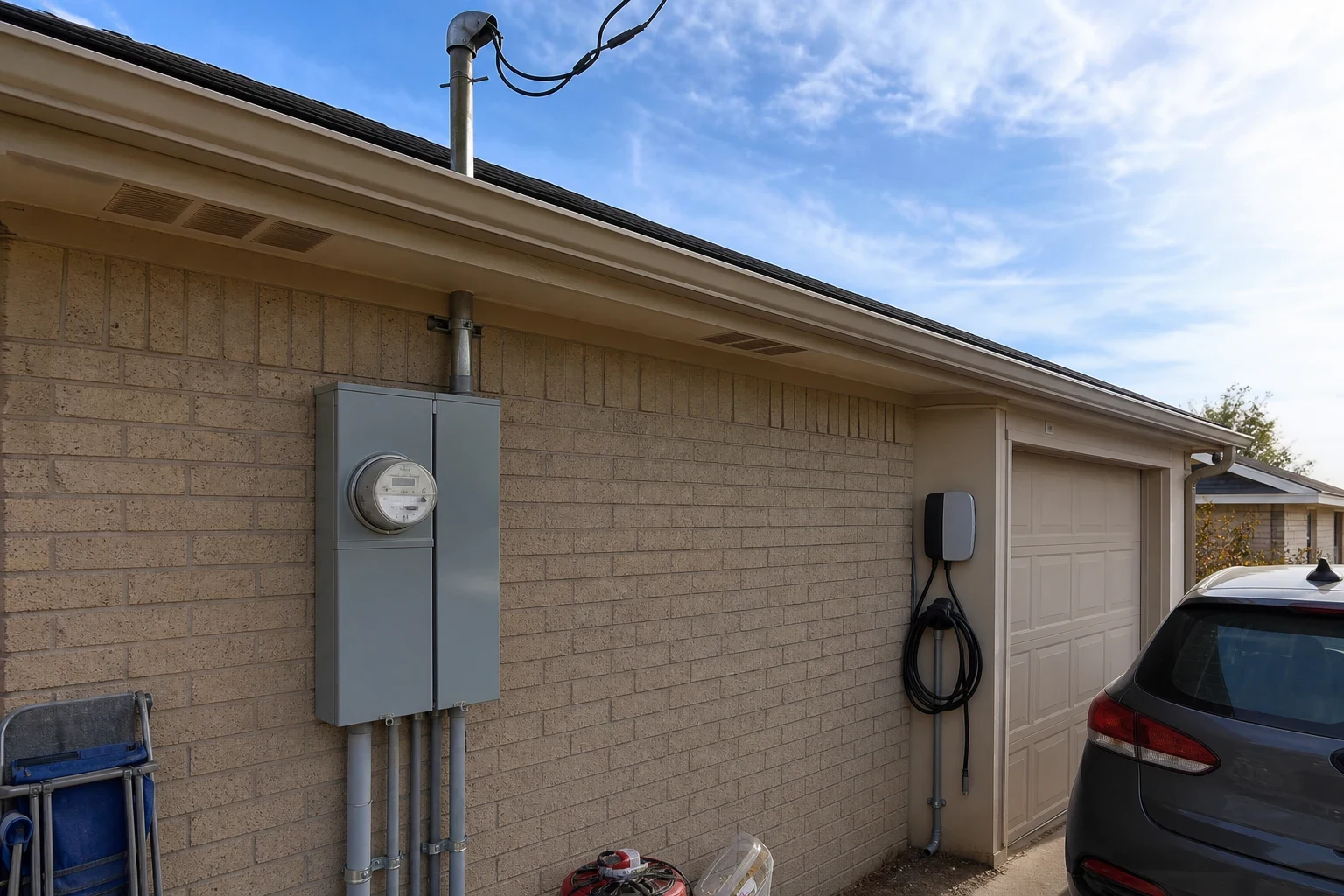
- That's where most of ours end up. We can also mount one outside near the driveway with weather-rated parts. The best spot depends on where you park and which side of the car the charge port is on.
- Will I need a panel upgrade?
- Not always. Plenty of panels have room for a charger circuit. If yours is full or close to its limit, we'll show you the numbers and talk through a smaller circuit, a load management device or our Panel Upgrades service.
- Should I go hardwired or plug-in?
- A hardwired charger is a clean, fixed setup and can often run at a higher amp rating. A 14-50 outlet lets you unplug and take the charger with you if you move. Plug-in setups also need GFCI protection, which we include.
- Is a permit needed for a home charger?
- In most cases it is, and getting it is our job, not yours. We file with whoever covers your address and line up the inspector once the circuit is ready to be looked at. If your utility wants notice of the added load, we'll tell you what they need.
- Can I buy my own charger?
- Sure. Just give us the make and model when you call so we can check its amp rating and mounting needs before the visit. If you haven't bought one yet, we can tell you what size your panel supports first.
- How long does it take?
- Most installs are done in a day once the visit and estimate are wrapped up. Long wire runs or panel work can add time, and we'll tell you that up front.
Ready to Charge at Home?
We'll check your panel, measure the run and give you a straight answer on what fits. We work in Benbrook, Fort Worth, Aledo and the towns nearby.