ServicesGenerator Installation
Generator Installation in Benbrook
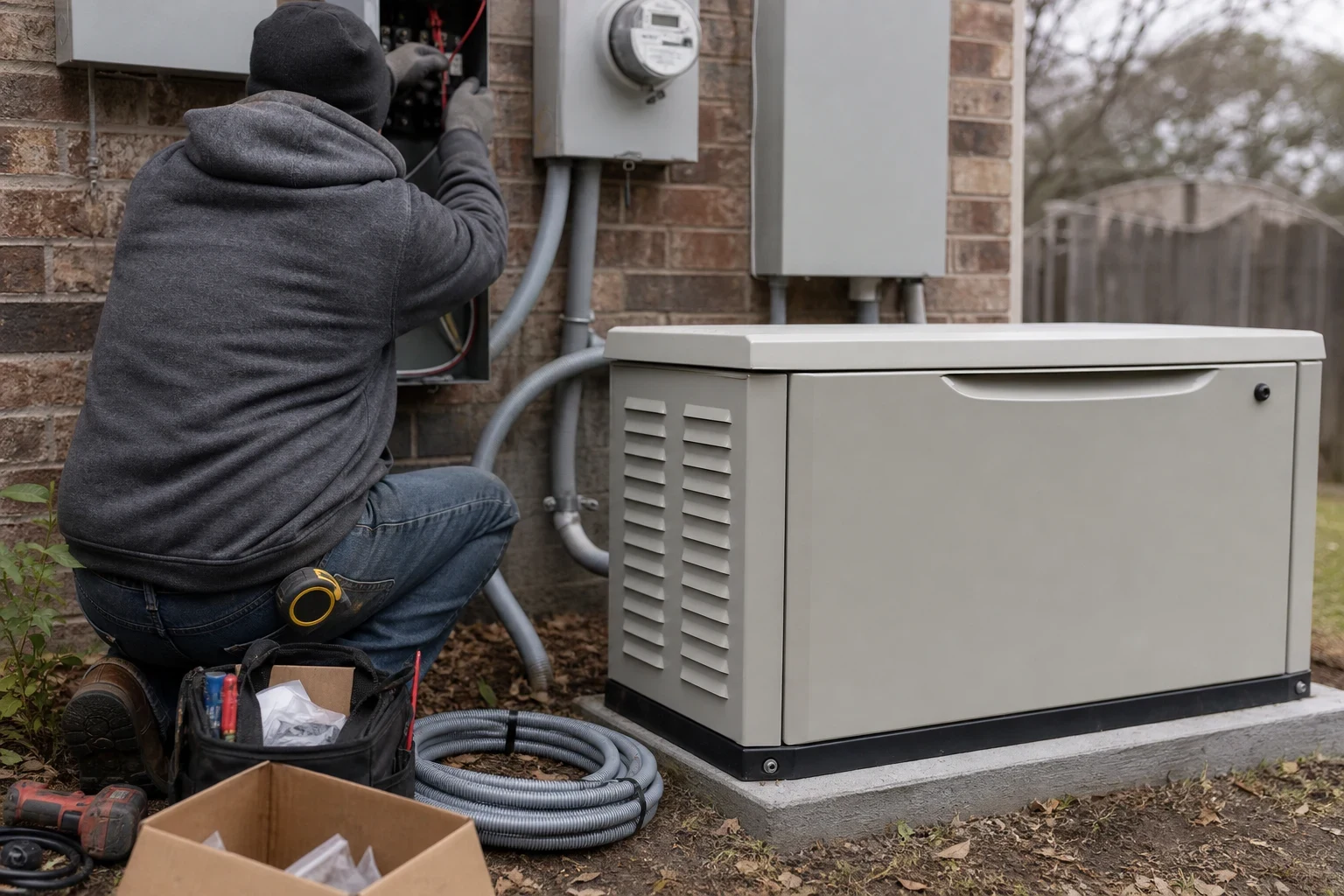
We install standby generators and portable generator hookups for your home. Before we pick a size, we count what you actually need to run and check the panel it will tie into. That way the generator carries your load and the hookup passes inspection.
A Generator That Fits Your Home, Not a Guess
A lot of generator trouble starts on day one. The unit is too small for the air conditioner, or too big for what the house really uses, or it is tied into a panel that was already in rough shape. We start by finding out what your home draws and what you want running when the power drops.
From there we install one of two setups. A standby generator sits outside on a pad, runs on natural gas or propane and starts on its own through an automatic transfer switch. A portable setup uses a power inlet on the outside wall and an interlock or manual transfer switch, so you can plug in safely instead of running cords through a window.
Both keep generator power off the utility lines, which protects you, your neighbors and line crews. Ice storms and summer thunderstorms around Benbrook can knock power out for hours, and a correct hookup means your home keeps the circuits you chose without guessing.
What the Installation Covers
- Load count and sizing
- We list the appliances and circuits you want backed up, including the AC, fridge, well pump or medical equipment. We measure where we can instead of going by nameplates alone. The size comes from that list.
- Panel check before tie-in
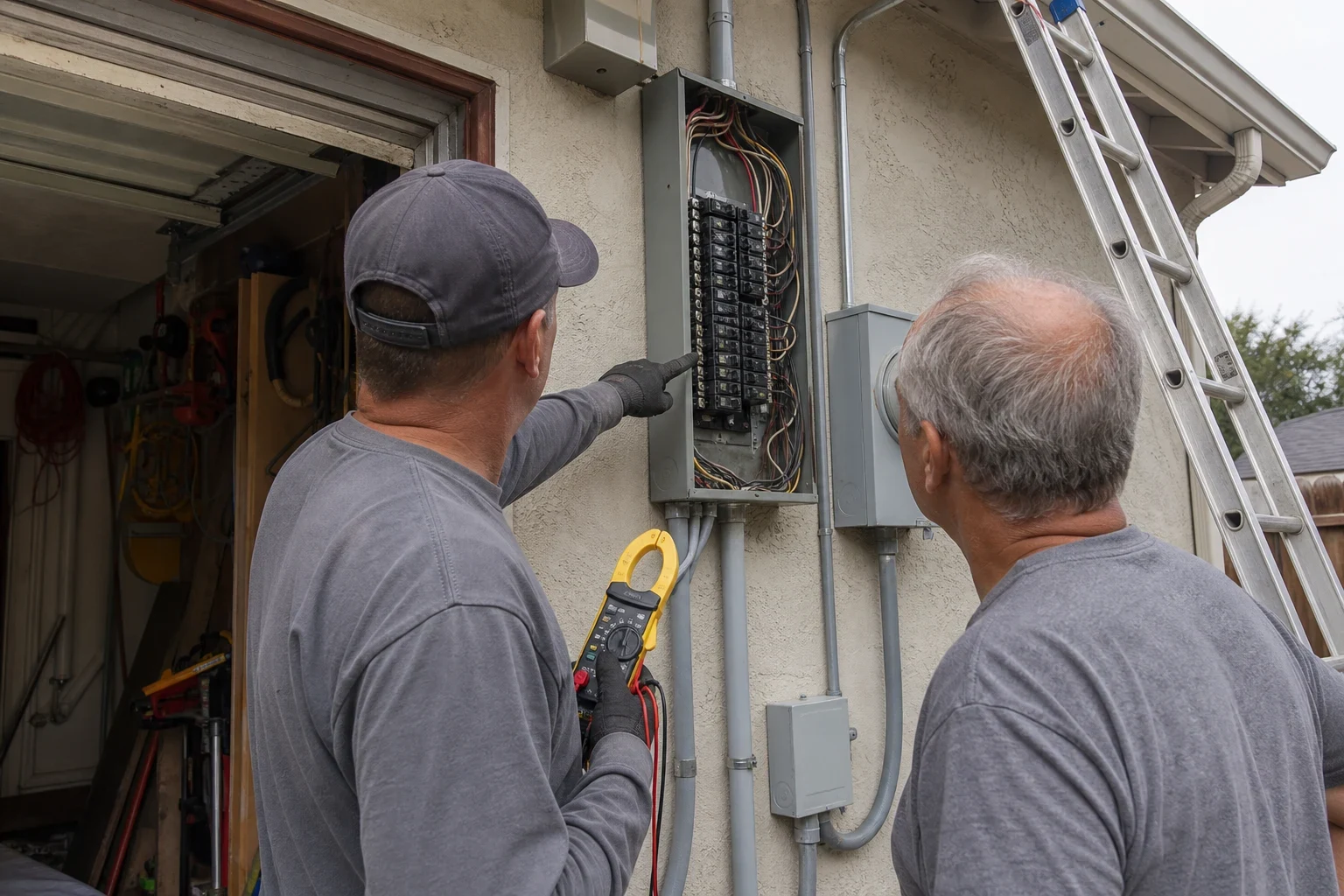
- We open your panel and look at its condition, space and breaker brand. If it can't safely take a transfer switch, we tell you up front and explain the panel upgrades option.
- Transfer switch or interlock
- Standby units get an automatic transfer switch, whole-house or essential-loads. Portable setups get an inlet box and an interlock or manual switch. Either way, the generator and the utility can never feed the house at the same time.
- A good spot for the unit
- The generator goes on a solid, flat base, kept back from windows, doors and vents by the distance its maker's instructions spell out. We also weigh noise toward bedrooms and neighbors, where rain runs off, and whether a tech can get to it later.
- Fuel connection coordination
- We look at your gas meter and line size early, since an undersized line can starve the generator. We coordinate the gas hookup so it is done and tested before startup.
- Startup and test under load
- We fire it up, switch the house over and watch voltage and frequency with real loads running. Then we show you how it works.
Signs It Is Time for a Generator
Outages that last for hours
If a storm or grid strain leaves you in the dark long enough to lose food or a comfortable house, backup power earns its keep.
Someone at home depends on power
Oxygen concentrators, CPAP machines and medicine that needs a fridge can't wait for the utility. A generator keeps those running.
Extension cords through the window
Running cords from a portable generator is a hassle and a carbon monoxide risk if the unit sits too close. An inlet and interlock fix that.
A cord plugged into the dryer outlet
Feeding the house backward through an outlet is dangerous. It can energize the utility lines and hurt someone down the street. If you have done this, it is time for a real transfer switch.
You work from home
Losing internet and a charged laptop for a day costs money. A small essential-loads setup can cover your office, router and fridge.
How a Generator Job Runs
- 1
Sizing visit
We walk your home with you, list the loads, check the panel and look at where the unit and fuel line can go. You get our findings in plain words.
- 2
Written plan and estimate
We lay out the generator size, switch type, placement and any panel or gas work. You see every line item before you decide.
- 3
Permits
We pull the permits and schedule inspections as required by your local jurisdiction, so the work is on record.
- 4
Install day
We set the pad and unit, mount the transfer switch, run the wiring and make the connections. Most standby installs take a day or two on site, and we clean up as we go.
- 5
Test, inspect and walk through
We test with the house on generator power, meet the inspector and show you how to run the system and what upkeep it needs.
What Moves the Price
Every generator job is priced from what we find on the sizing visit. Two homes on the same street can land far apart depending on the panel, the gas line and what you want to back up. We put each piece in writing so nothing shows up later.
- Standby or portable
- Adding an inlet box and interlock for a generator you roll out yourself is the smaller job. With a standby unit, more output means a higher number.
- Whole-house or essential loads
- Backing up every circuit takes a larger unit and switch. Picking the circuits that matter can bring the cost down.
- Panel condition
- An old, full or failing panel may need work or replacement before a transfer switch can go in.
- Distance and fuel line
- The farther the unit sits from the panel and gas meter, the more wire and pipe it takes. A meter or line that is too small adds work.
- Permits and site prep
- Permit fees and pad prep on sloped or rocky ground add to the total.
Before You Buy a Backup Generator
Something not covered here? (682) 327-1771
How do you work out how big a generator my home needs?
We add up the things you want powered during an outage. Lights, the fridge and a few outlets make a small load. Central AC and an electric range make a big one. On the sizing visit we tally those up and pick the unit from that list, not from a chart on the box.
Can a generator run my air conditioner?
Yes, if it is sized for it. The AC compressor pulls a big surge when it starts, so we account for that. Sometimes a soft-start kit on the AC lets a smaller generator handle it.
Should I go with a standby or a portable setup?
Standby starts on its own and runs on gas, so you do nothing during an outage. Portable costs less but you have to roll it out, fuel it and plug it in. We will lay out both for your home and let you choose.
Will a generator install need a permit, and who gets it?
In most cases it does, and getting it is our job. We file for it and book the inspection the way your local jurisdiction asks. Before the job closes, an inspector looks over the transfer switch, the wiring and where the unit sits.
Is a home battery a better fit than a generator?
For some homes it is. Batteries run quiet and need no fuel but cover fewer hours. Our Home Battery Backup Systems page explains how they compare, and we can talk through both on one visit.
Who takes care of the generator after it is installed?
Standby generators need regular exercise runs, oil changes and battery checks. We handle that through our Generator Service & Repair work, so the unit is ready when the power goes out.
Get Backup Power Sized Right
We start with a sizing visit to count your loads and check your panel. Then you get a written plan before any work begins.