ServicesTorque & Cleans
Panel Torque & Cleans in Benbrook
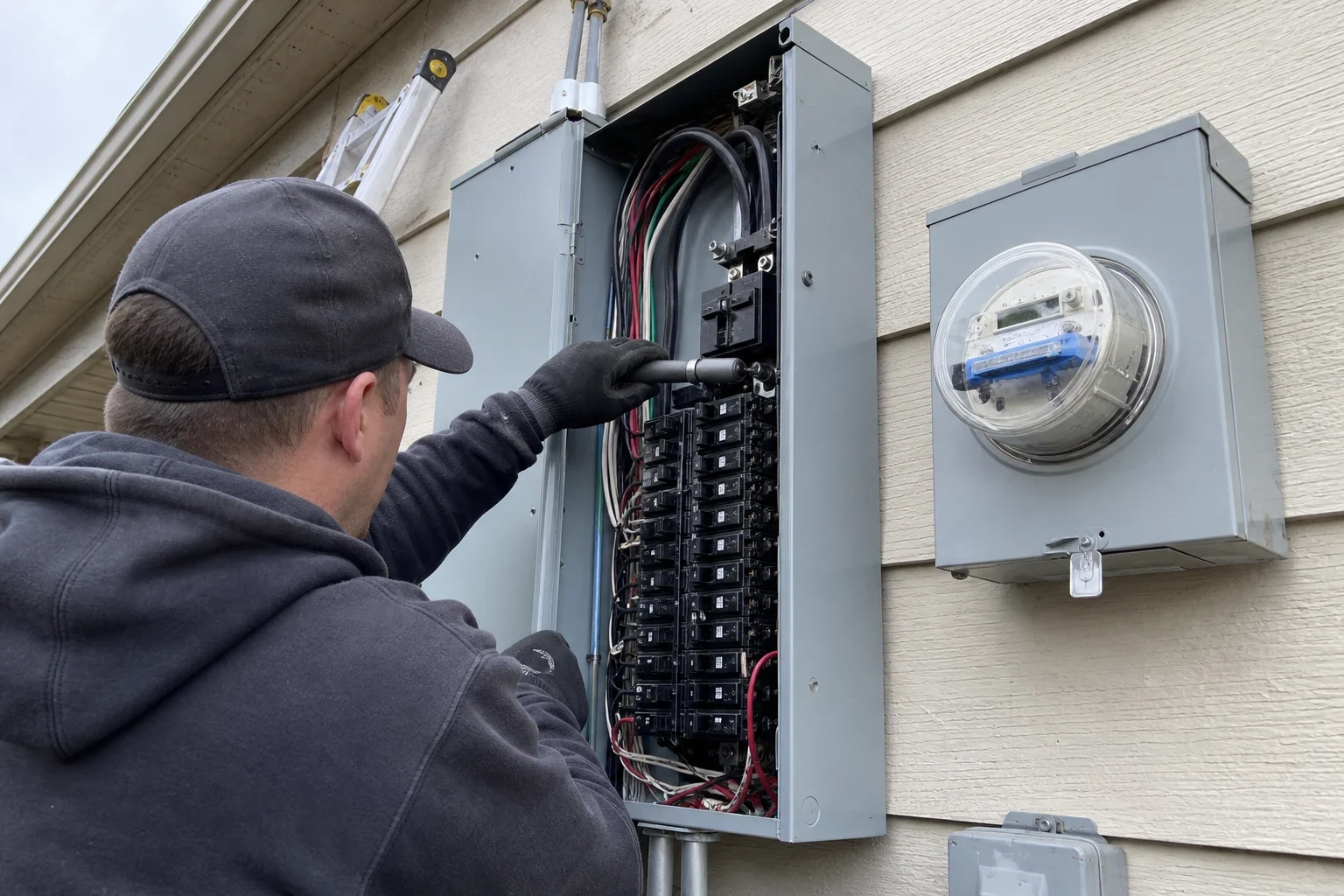
Connections in your electrical panel work loose over time. A loose lug runs hot, and heat is how breakers fail and wires burn. We find the warm spots first, tighten every connection to the maker's spec, clean out the panel and show you what we saw.
What a Torque and Clean Is
Your panel's wires are clamped down by terminal screws and lugs. Current flowing through them warms the metal, and it swells slightly. When the load drops, the metal cools and pulls back. Years of that back and forth slowly ease the clamp off. Aluminum feeder wire loosens faster than copper, since it tends to creep out from under the terminal.
A loose connection adds resistance. Resistance makes heat. Heat darkens the insulation, cooks the breaker and can pit the bus bar it sits on. A torque and clean stops that early. We bring each terminal back to the torque printed on the panel label, and we clear out the dust and debris that holds heat and moisture.
The point is to see what is going on before anything gets tightened. We check the panel while it is working, so we know which connections were running hot and why. If something is already damaged, you hear about it then, not after a part fails.
What We Do on the Visit
- Check under load first
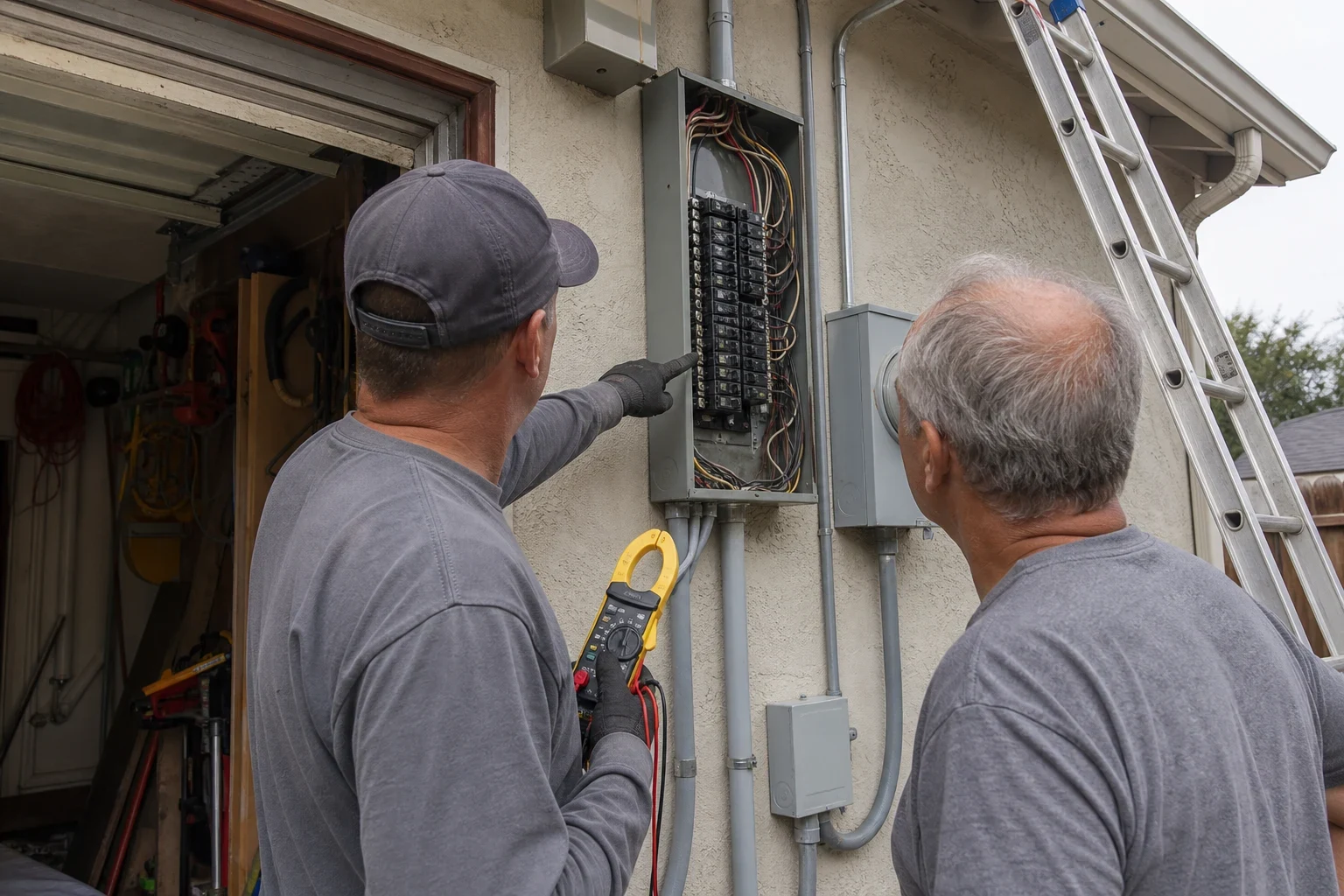
- Before we shut anything off, we scan the panel with a thermal camera and take current readings while your home is running. Hot spots tell us which connections were loose and which circuits are working hardest.
- Main lugs and neutral bar
- We tighten the service lugs, neutral and ground bars to spec with a calibrated torque tool. Guessing by feel is how terminals end up too loose or stripped.
- Every breaker terminal
- Each breaker screw gets brought to its rated torque. We also check that breakers seat firmly on the bus and are not loose in their slots.
- Cleaning without water
- We vacuum and brush out dust, insulation fibers, insects and old nests. Outdoor panels in the Texas heat and wind collect a lot of grit, and that buildup holds heat.
- Corrosion and moisture check
- We look for rust, green or white buildup on terminals, and water trails from a bad seal or conduit. Where aluminum wire is present, we confirm the right compound is on the connections.
- Photos and plain notes
- You get photos of what we found and a short written rundown. If anything needs repair, it is listed with what it is and why it matters.
Signs Your Panel Needs Attention
The panel cover feels warm
A cover that is warm to the touch, when the room is not, often means a connection inside is running hot.
Buzzing or crackling
A steady hum or a crackle near the panel can come from a loose terminal or a breaker that is not seated well.
Lights dim when big loads start
If lights dip hard when the AC, dryer or well pump kicks on, a loose main or neutral connection may be part of the cause.
Breakers trip without a clear reason
A breaker that trips on a light load may be reacting to heat at its own terminal rather than too much demand on the circuit.
Discoloration or a burnt smell
Brown marks on breakers or melted insulation mean heat damage has started. Shut off that breaker if you can do it safely, and book a visit.
Nobody has opened it in years
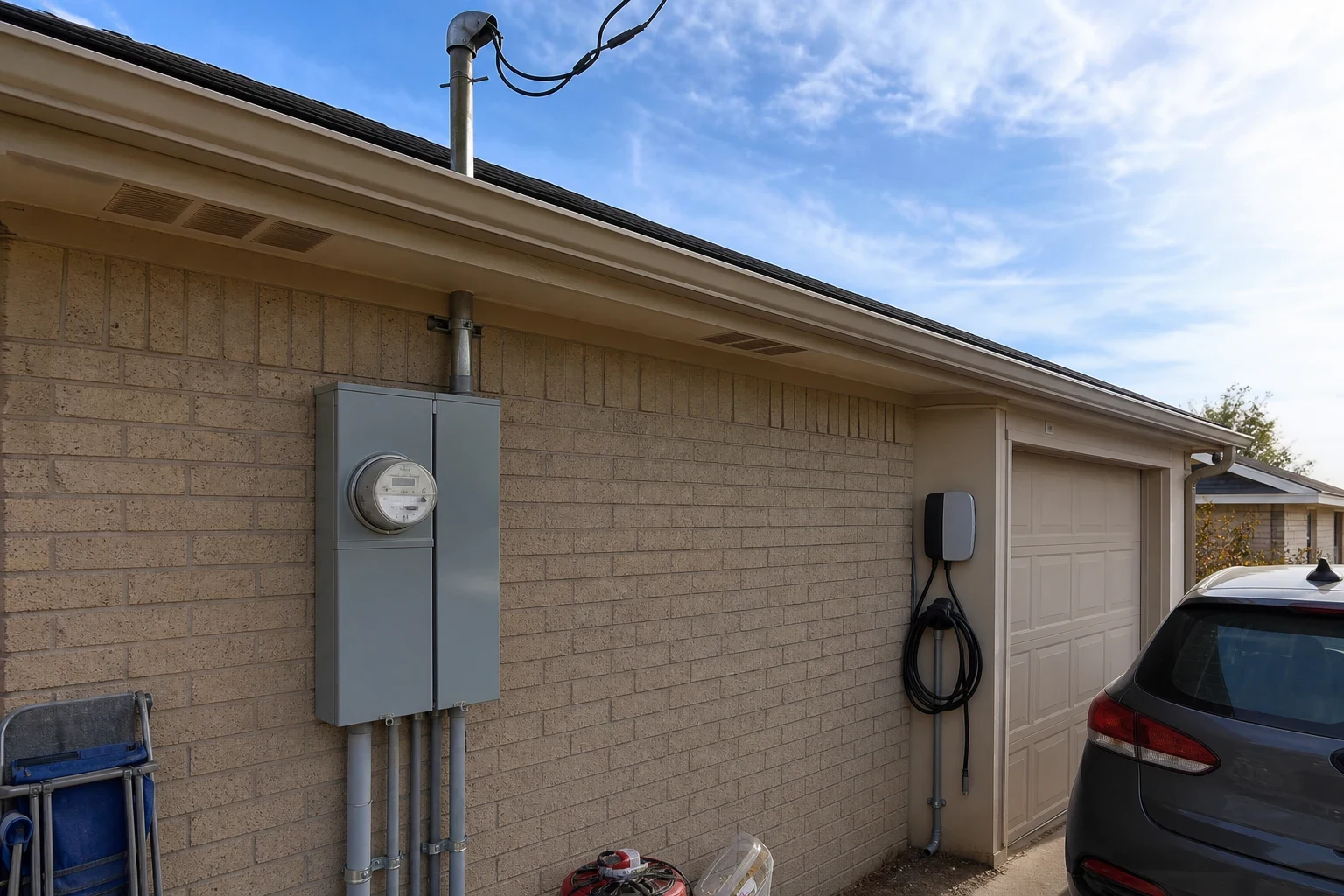
Most panels are never checked after the day they were installed. Heavy loads like an EV charger or pool pump make a check more worthwhile.
What Moves the Price
A torque and clean is mostly labor and careful time. The price depends on how much equipment we are checking and what shape it is in. We explain the cost by phone when you book, and any repairs we find are priced separately before we do them.
Panel size
A 40-space panel full of breakers takes longer than a small one. More terminals means more to tighten and inspect.
Subpanels and disconnects
A garage subpanel, an outdoor AC disconnect or a meter-main combo each adds time.
Condition inside
Heavy dust, nests, rust or aluminum connections that need fresh compound take more work than a clean, dry panel.
Access
A panel behind shelving or in a tight closet, or an outdoor panel in full sun, can slow the job down.
How the Visit Runs
- 1
You book by phone
Let us know where the panel sits, roughly how old the house is and what you have seen, heard or smelled. We pick a time together, and you find out up front how long the power will be off.
- 2
We test while it runs
With your home under normal load, we do the thermal scan and current readings. This is where we find the cause, not just the symptom.
- 3
Power down and verify
We shut off the main and test that the panel is dead before any tool goes in. Where the service lugs need the utility side de-energized, we handle that as the utility and local jurisdiction require.
- 4
Torque, clean, inspect
We tighten every connection to spec, clean the enclosure and look closely at breakers, bus and wire ends.
- 5
Power up and walk through
We restore power, check the readings again and show you the photos. Any repair is explained and priced before we touch it.
What Homeowners Ask Us About Panel Checks
How many years can I go between visits?
For a typical indoor panel, every few years is usually enough. Outdoor panels, older equipment and homes with big loads like EV chargers, pool pumps or shop tools should be looked at more often. After our first visit, we base the next date on what we actually saw inside your panel.
Will my power be off the whole time?
No. The testing part happens with the power on. The shutdown is only for the tightening and cleaning, and we tell you the expected length when you book so you can plan around fridges, medical devices or work calls.
My panel was put in recently. Does it still need this?
It can. Terminals are not always tightened correctly on install day, and a new panel can loosen like any other. The thermal scan shows fast whether anything is warm. If it all checks out, you now have clean readings to compare against later.
What if you find a burned breaker or bus?
We stop, show you the photos and explain what failed and why. Then we give you the repair cost. Small fixes like a breaker swap fall under electrical repair, and a badly burned bus may point toward panel upgrades. Nothing gets done without your okay.
Does someone have to be home?
Yes, someone should be there to let us in and to go over the results at the end. Looking at the photos together makes the findings much easier to follow.
Get Your Panel Checked Before It Runs Hot
Book a visit and we will test your panel under load, tighten and clean it, and show you exactly what we found. We work in Benbrook and nearby towns like Fort Worth, Crowley and Aledo.